
Mountain / Water
Future ShanShui City
Lishui, PRC 2020
Unfolding the landscape like a Chinese scroll
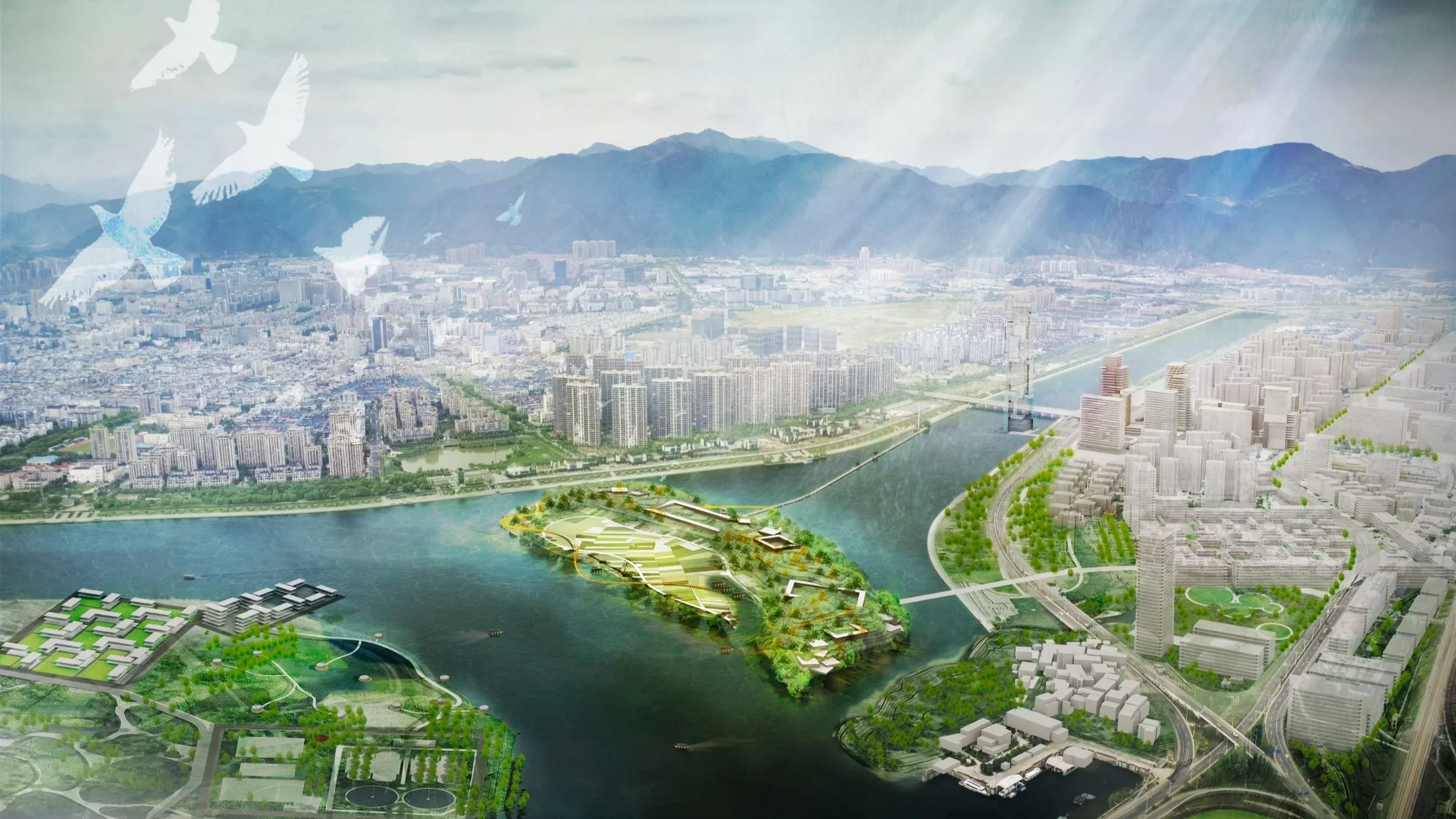
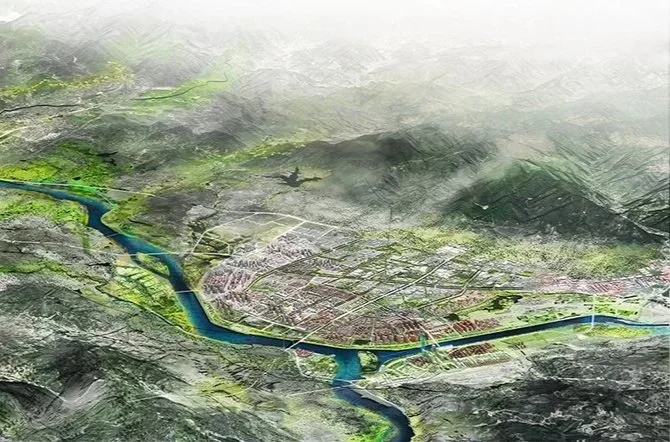
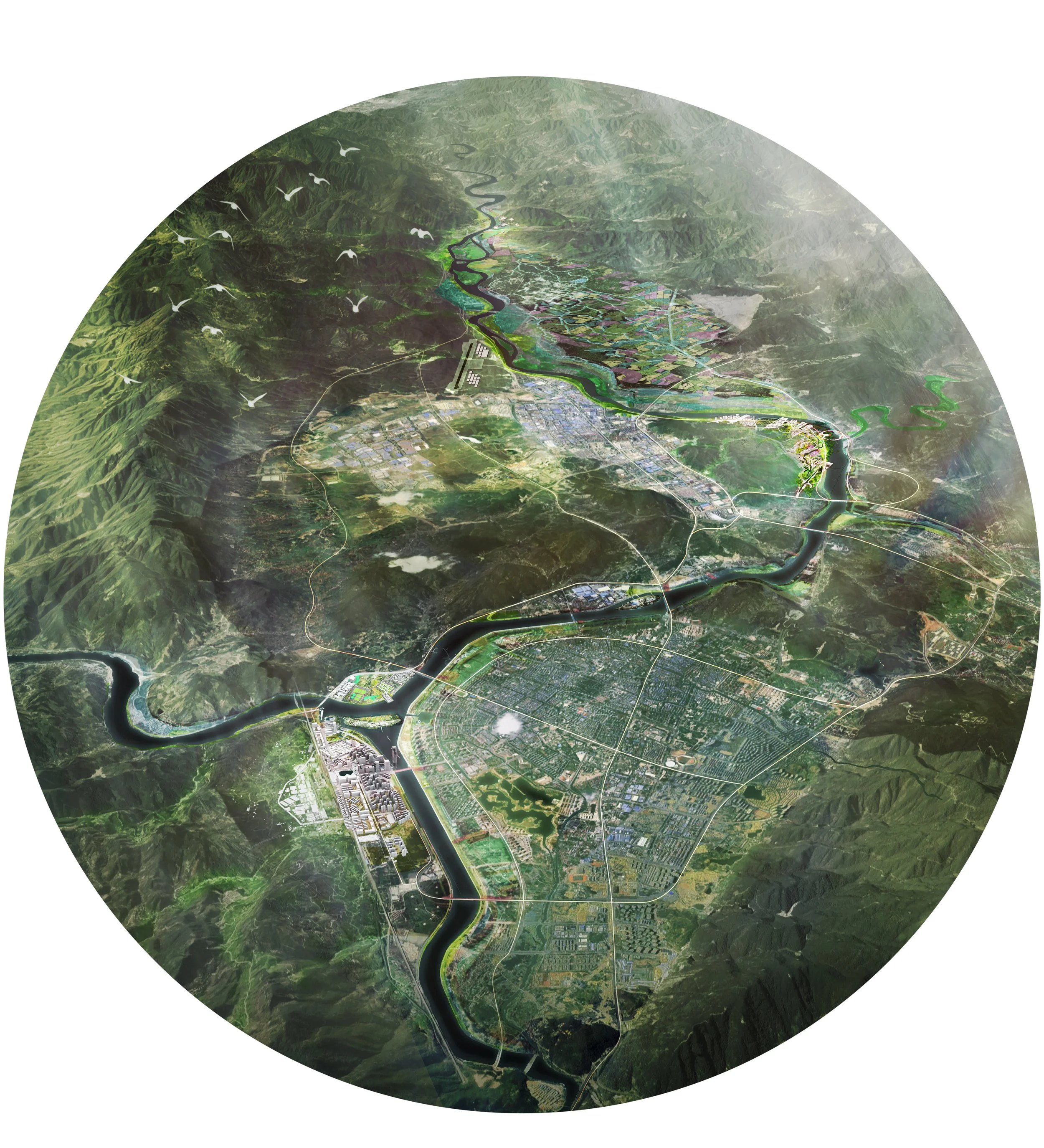
The 2020 “Future ShanSui City:Dwellings in the Lishui Mountains” invited competitors to reimagine urban development in Lishui, China by balancing it with the natural landscape in the spirit of Chinese Shenshui (mountain-water) principles. The international team of GROSS. MAX, UNStudio and Sytematica was shortlisted as one of ten finalists.
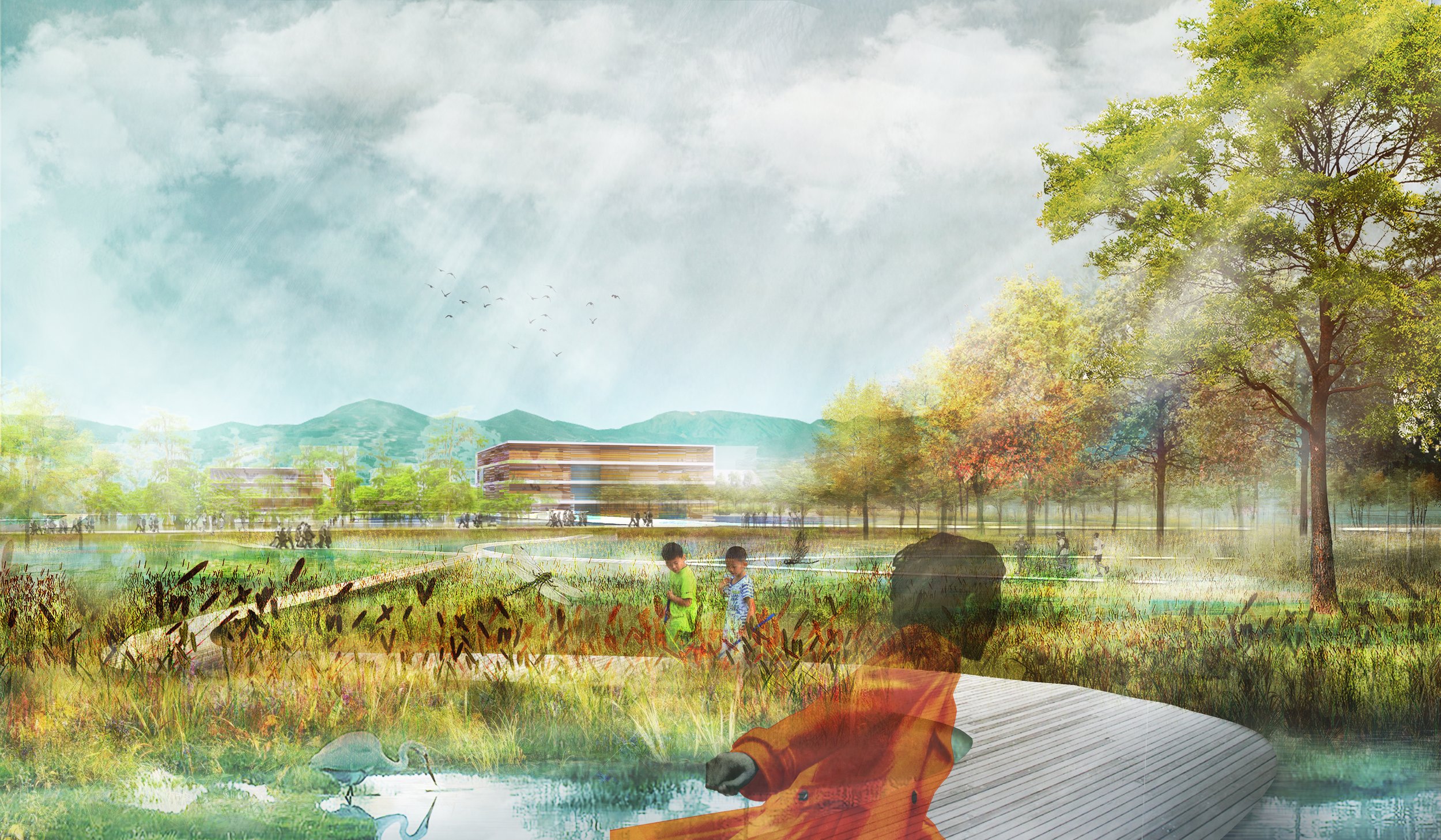
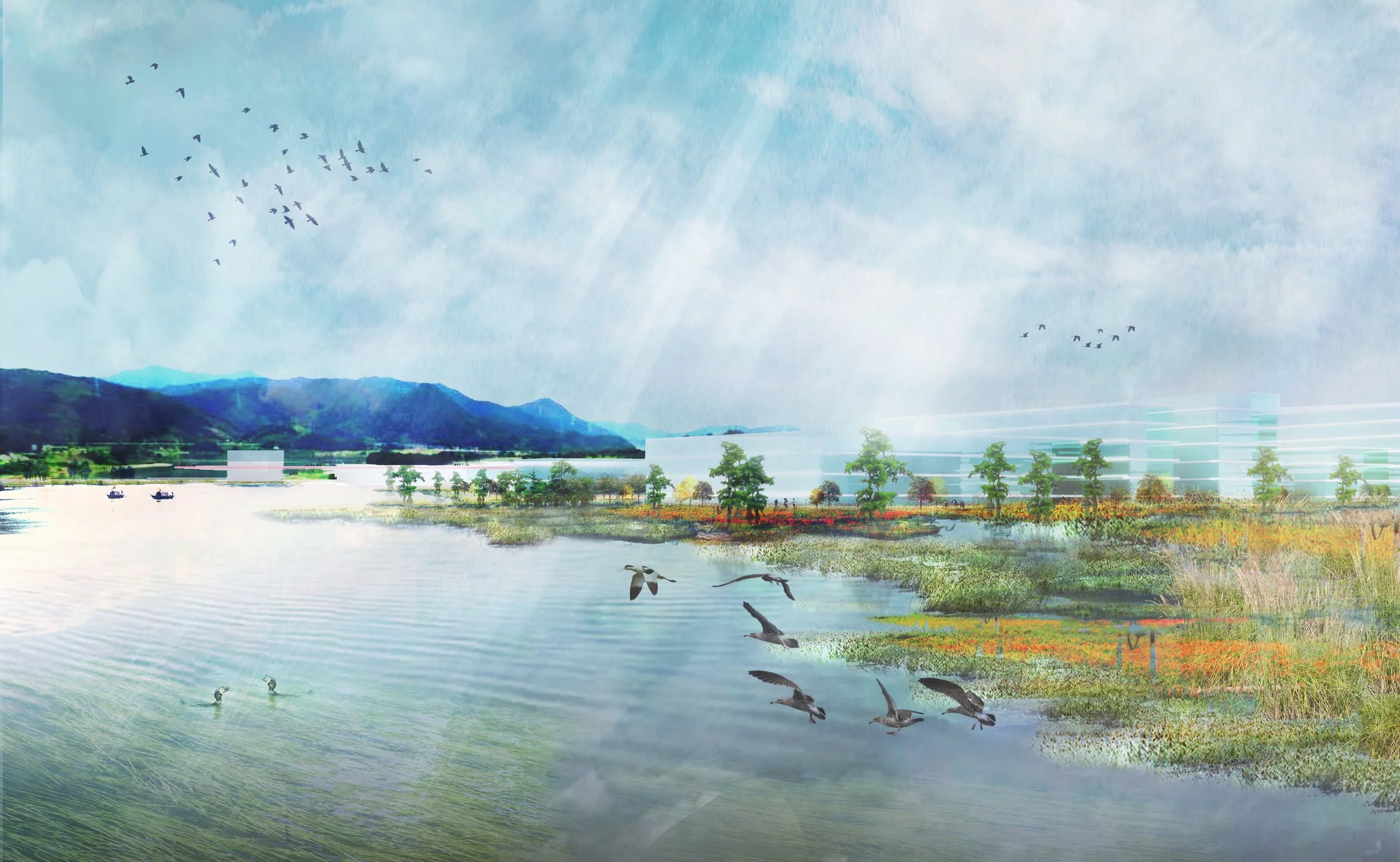
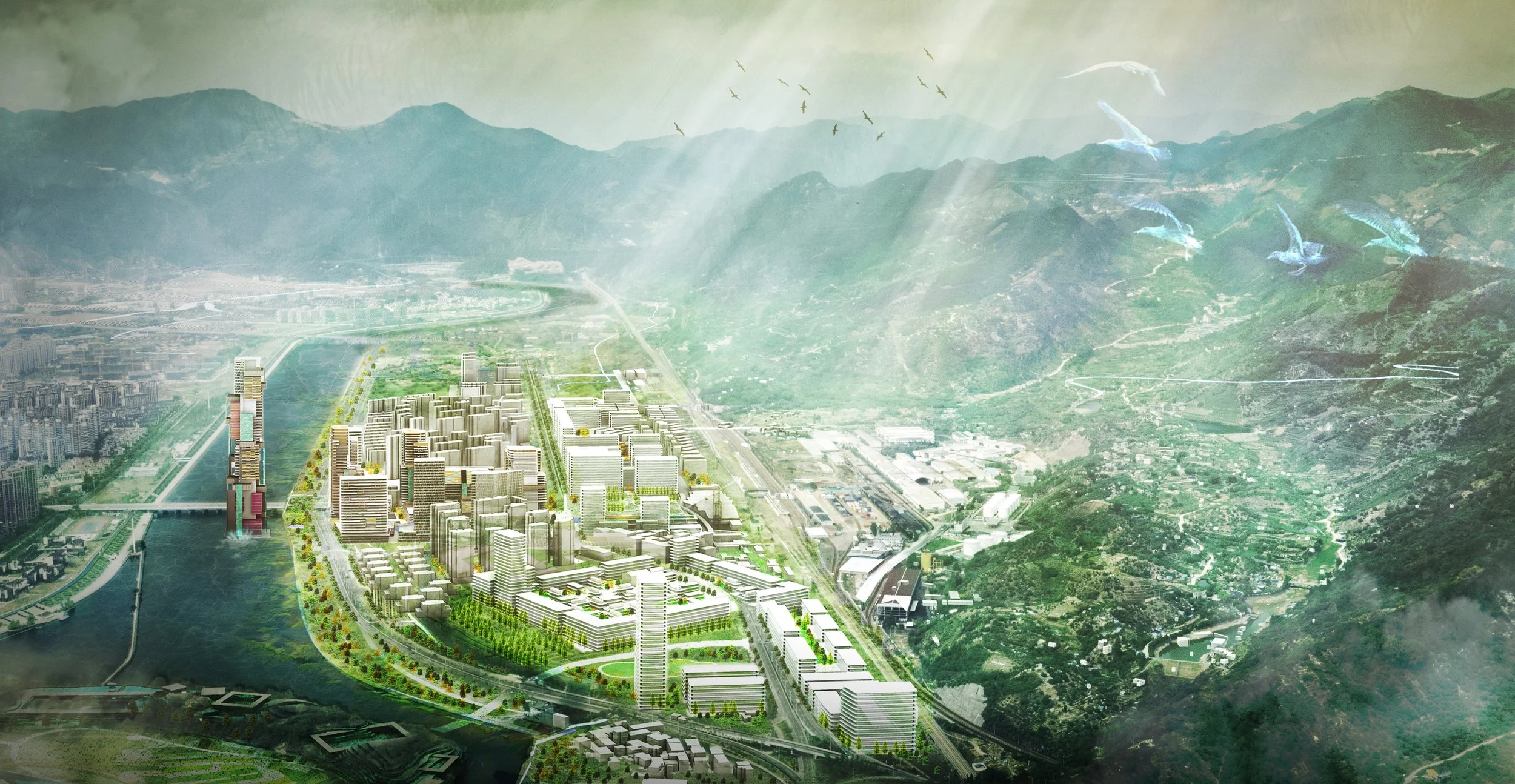
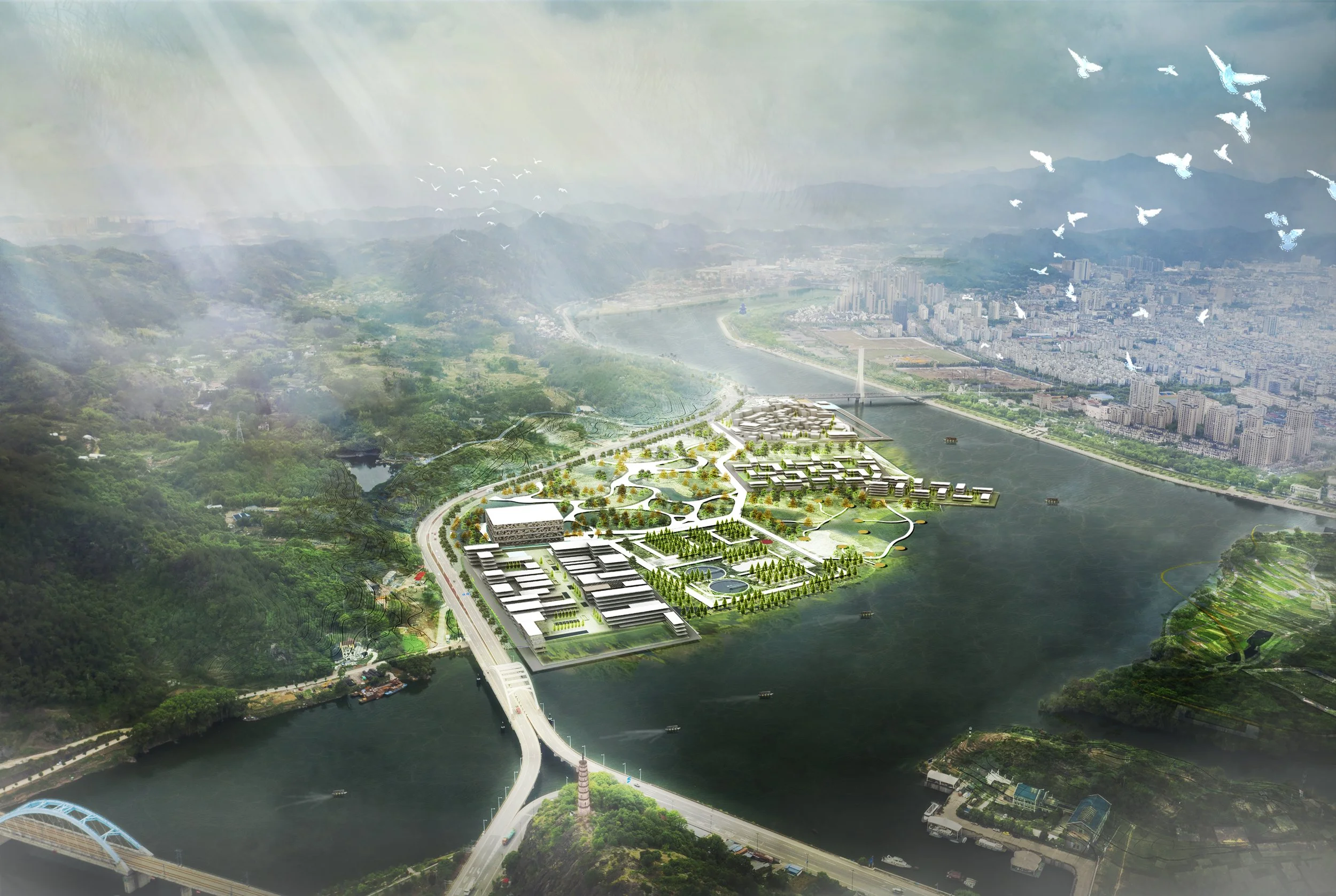
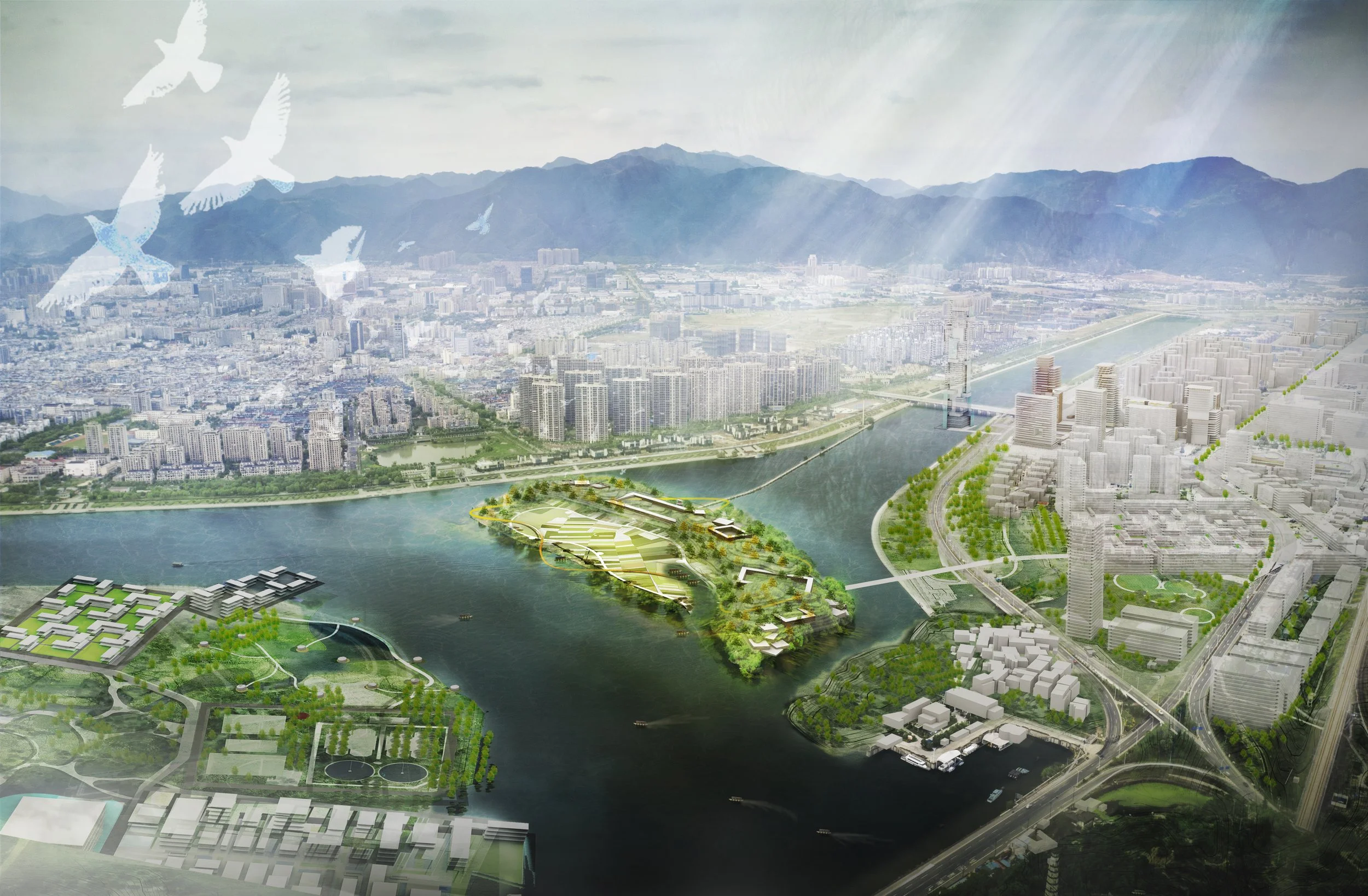
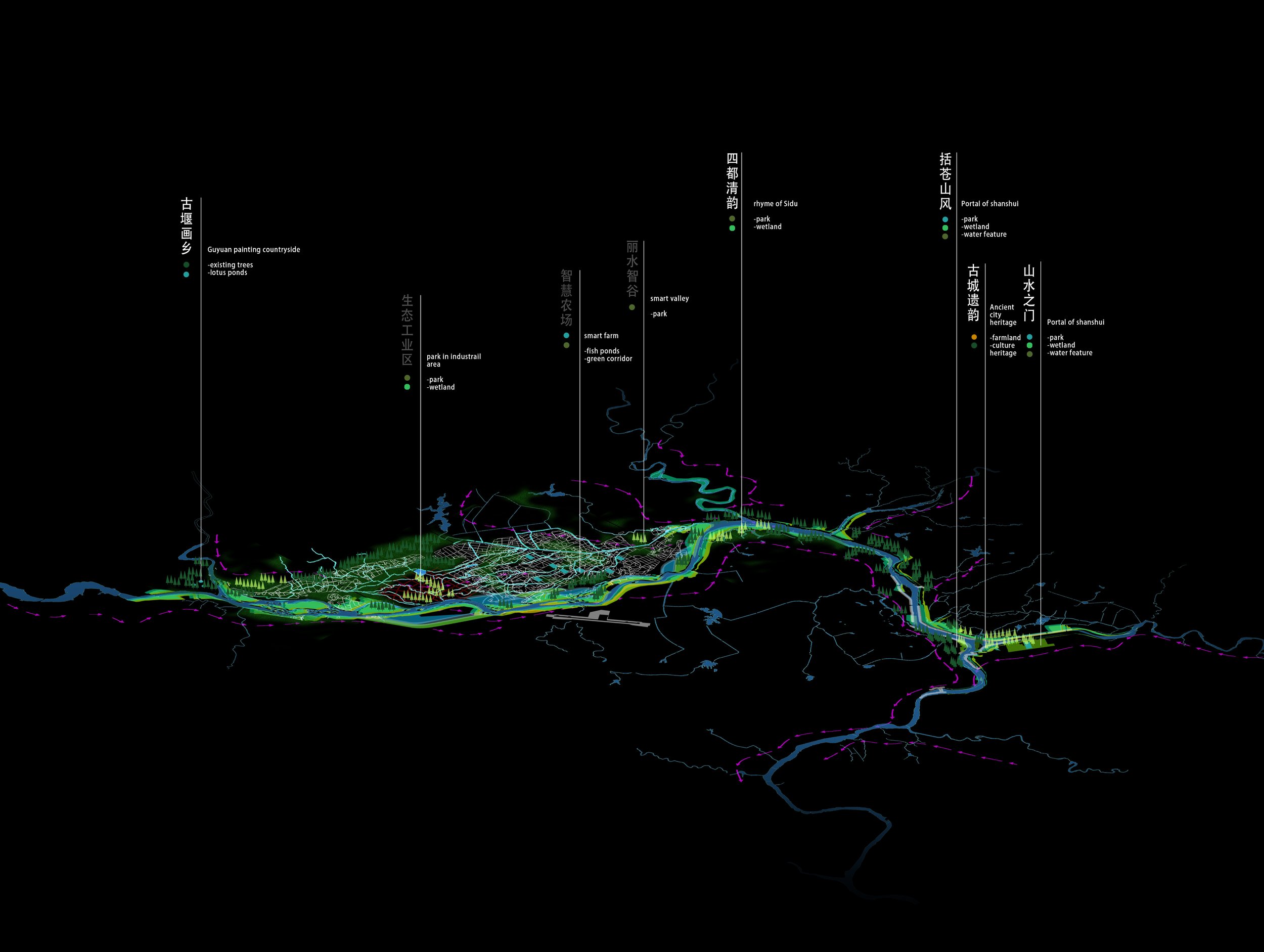
ShanShui inspires to utilize landscape as the foundation for urbanism. Landscape has the potential to frame the city structure and to promote urban development. Based on such concept our vision is to activate the potential offered by the landscape as the underlying structure for a heterogeneous urban / rural mosaic on the scale of both the city and its wider region. Our concept is not based on a nostalgic status quo but, on the contrary, is based on infusing landscape with the capacity for growth, change, and adaption over time. The urban development surrounding Lishui is developing towards an extensive carpet of patches, every path with its own programmatic opportunity and specific spatial structure. The landscape in between the archipelago of development patches is of key importance to allow for porosity and to provide a network of connective tissue that allow for the fluid flow of people, public transport, urban drainage, public spaces and vegetation. Our urbanistic approach is informed by the contemporary theory of ecosystem dynamics which uses similar terminology of patches, corridors and matrix.
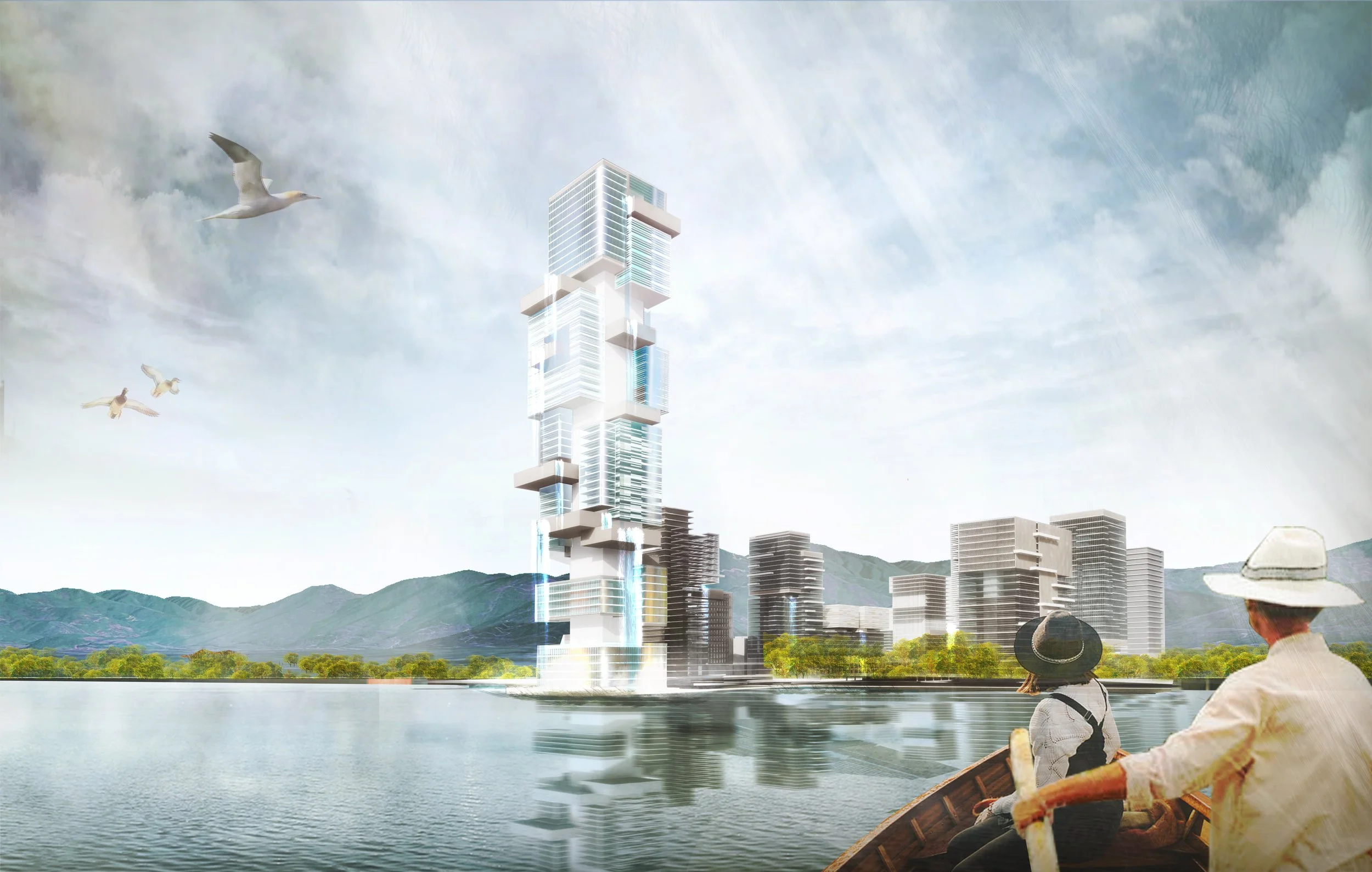
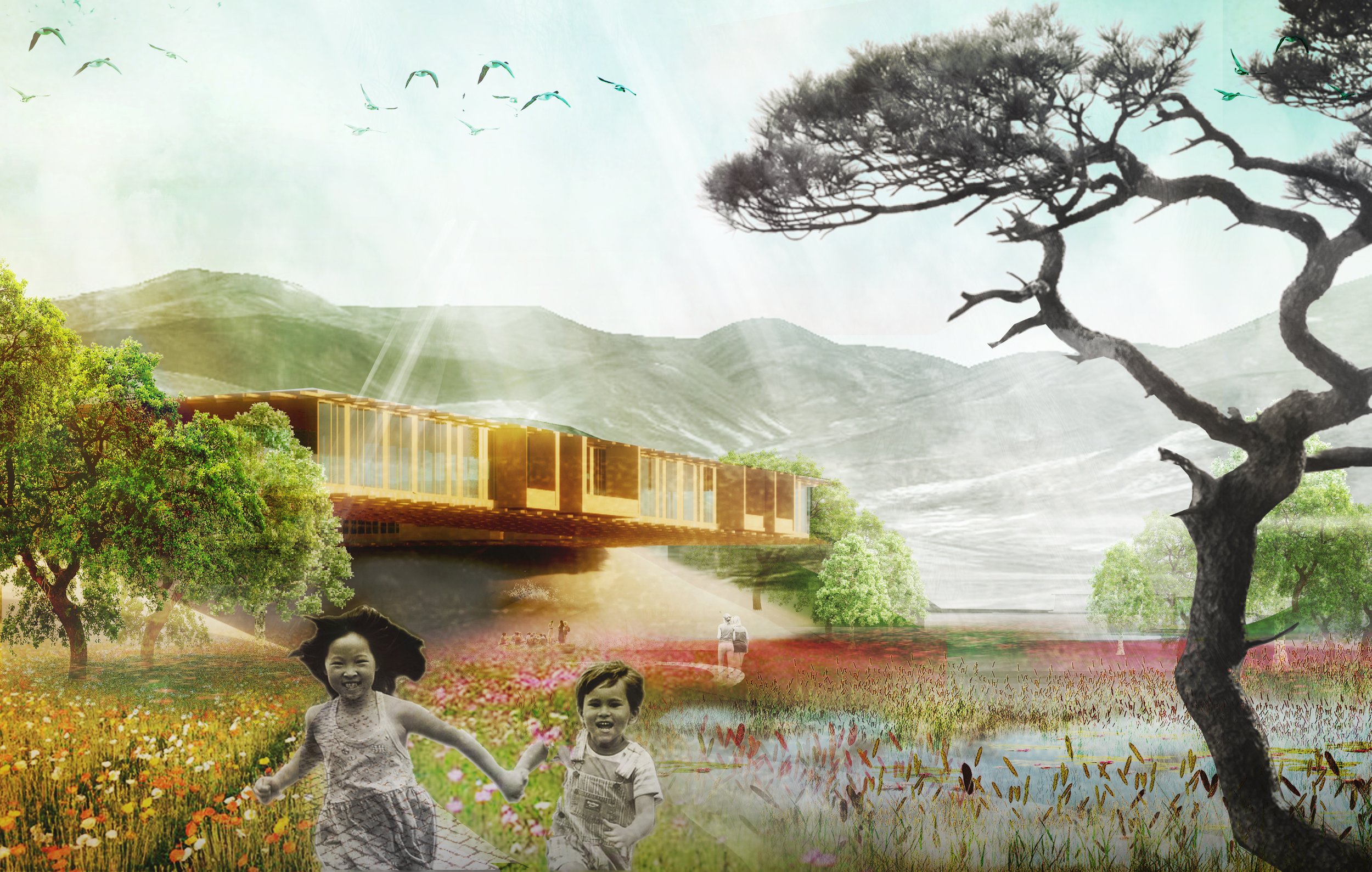
As part of this competition, we developed a fascination with a very different way of seeing, that of the classical Chinese landscape painters. A key concept in Chinese painting is the notion of emptiness; the importance of ‘negative space’. Translated in designing the landscape this means designing not so much for the build form but instead to take care for the unplanned, the unforeseen and the space in-between. Preserving the void to shape the city. Another important lesson is the way of depicting depth and perspective. To represent depth, most Chinese landscape paintings contain three individual planes: Foreground, Middle Ground and Background. Could we apply this principle in choreographing the landscape and townscape of Lishui in which our urban rooms are the foreground, the river with clouds of mist, wetland and water as empty middle ground and the hills, mountains and sky as heavenly background? Could we indeed envisage the idea that each of or urban room would become a ‘room with a view’! Finally, can we design the landscape like that of a horizontal scroll to unravel time through a travel log or story board? Indeed, we started to envisage our design as a cinematic experience, a journey through space and time. Like Chinese scroll drawings we started to explore the notion not that of the singular fixed-point perspective but on the contrary the opportunity to display multiple points of view.
Future Shan Shui City
Location: Lishui / China
Typology: Competition Urban Design / Landscape Planning
Site area: N/A
Year: 2020
Status: Complete
Role: Landscape Lead Consultant
Collaborators: UNStudio / Systematica
Client: People’s Government ofCity of Lishui
Image credits: GROSS. MAX.