
Vulcanic / Botanic
Not a master plan but a master process
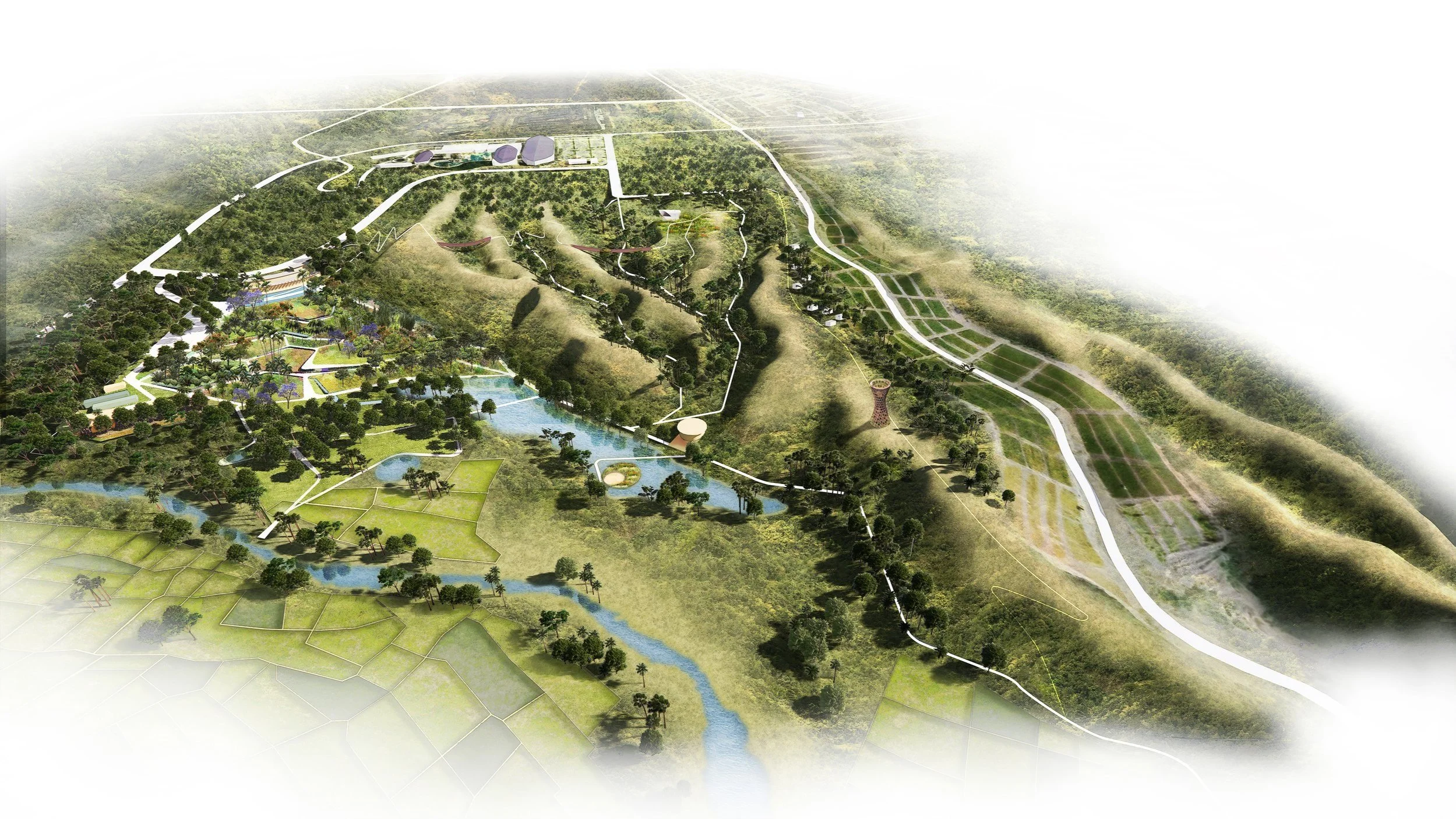
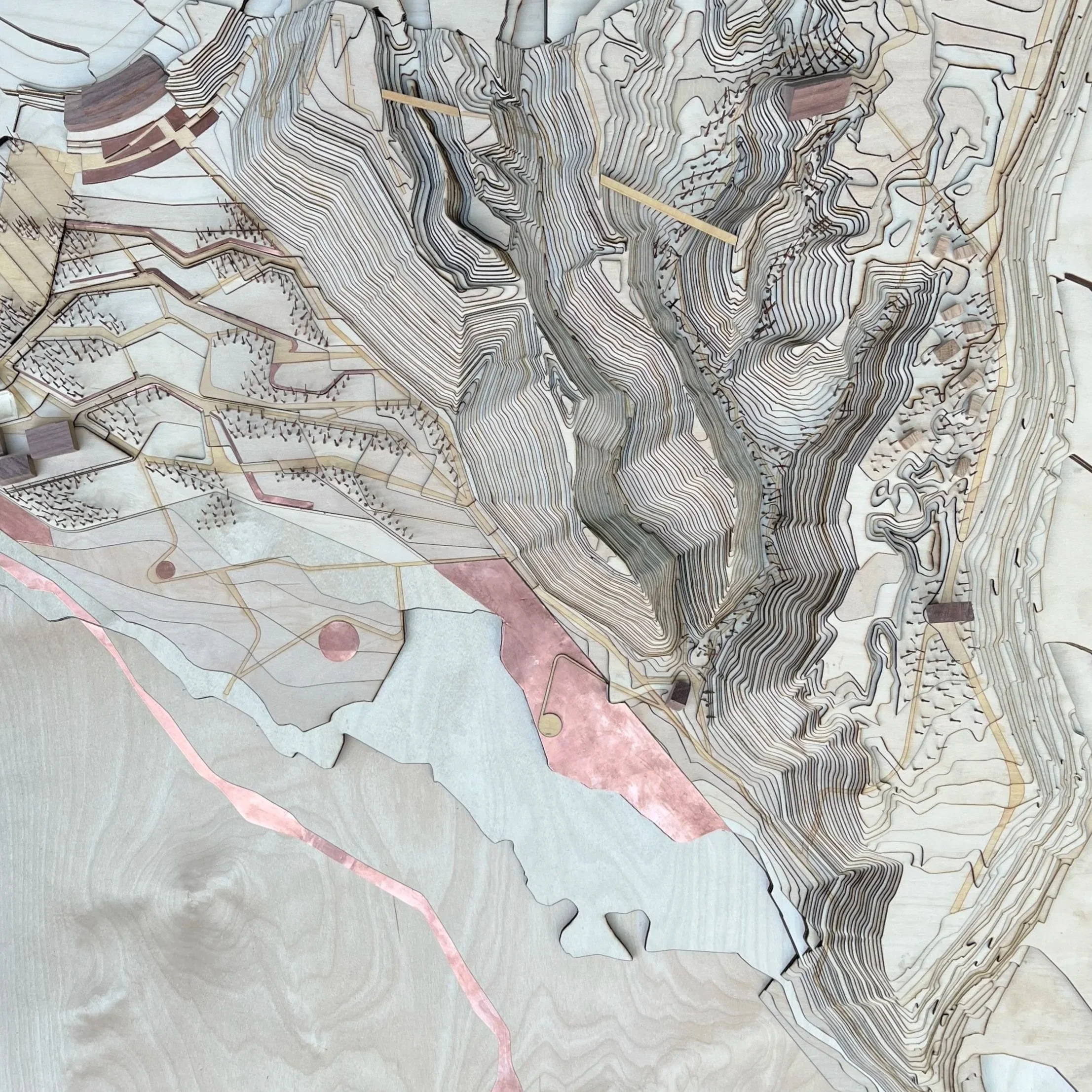
Our commission was to create a concept master plan for a new botanical garden in the Philippines located in a dramatic ‘moonscape’ landscape shaped as result of the volcanic eruption of Mount Pinatubo. From the moment we encountered the site we realized the unique nature of the project. A landscape as no other we entered before. An inhospitable terrain impossible to grasp in one overview and near impossible to trace as measured site plan. Only surveying of the site from the air with a drone allowed us an accurate overview of the site’s complexity. A shifting site composed of a fluvial fan of lahar (volcanic ash) deposits. We realized that the transformation of the site into a botanical garden should bear witness to a cyclical process of renewal by natural succession and become a dynamic ecological regeneration project to cultivate environmental awareness and a learning centre for education and research. The design is therefore intended to be more than a static garden sculpted by man but is instead formed from dynamic ecosystem processes and vegetation patterns of succession. Based on predominant native species and regional ecotones we propose a new generation of Botanical Garden reflecting upon the symbiotic integration of culture and nature.
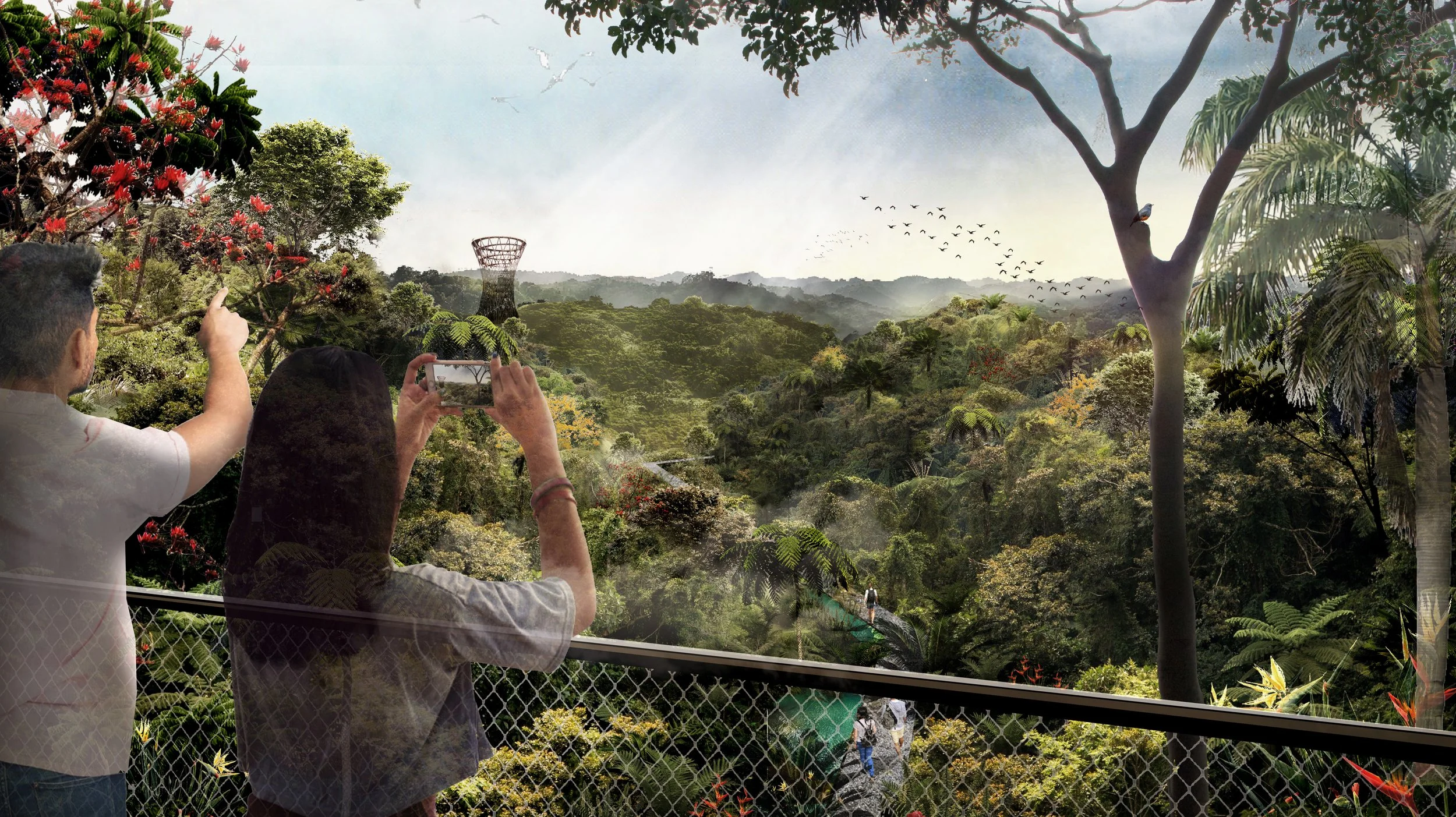
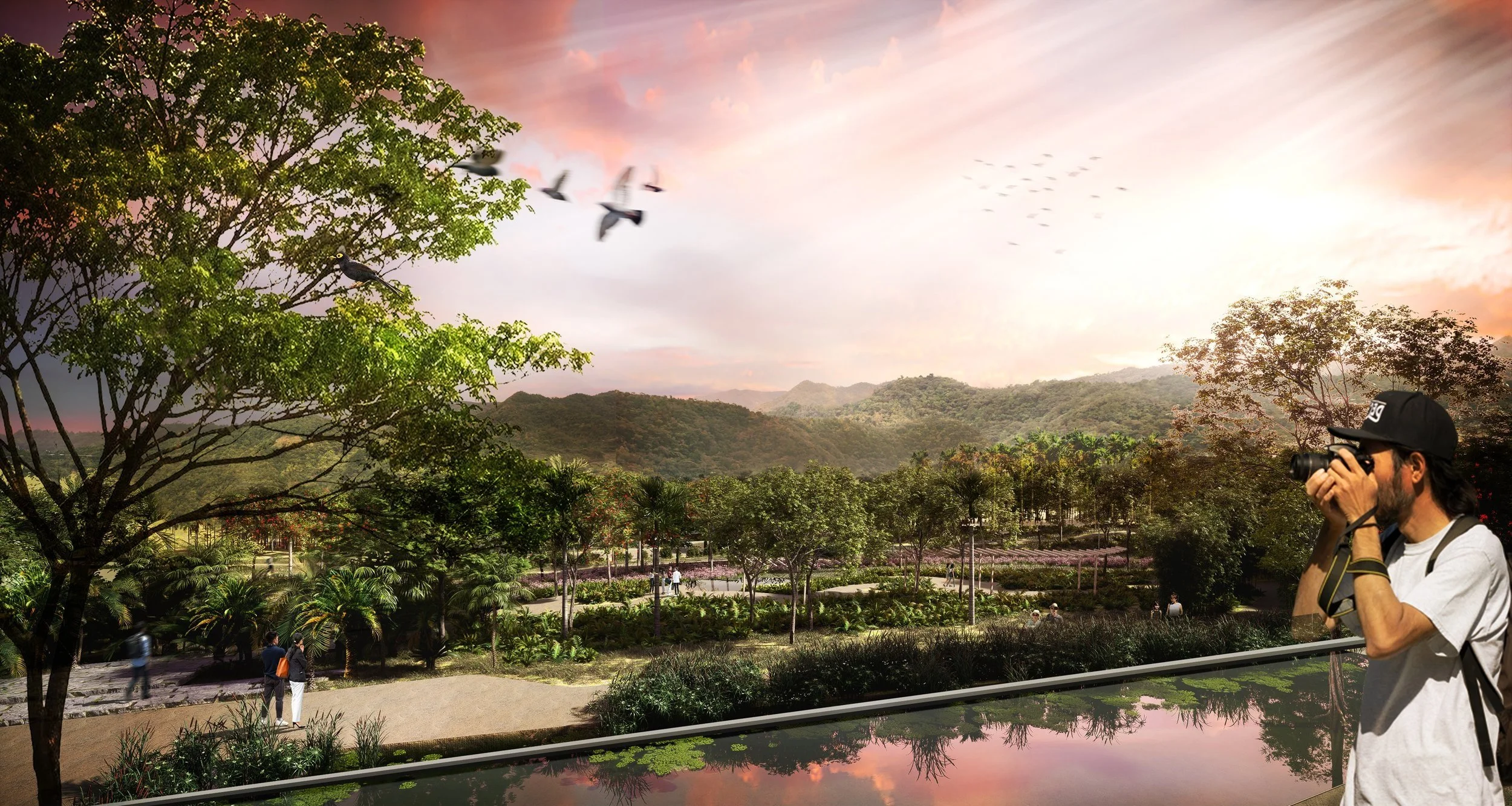
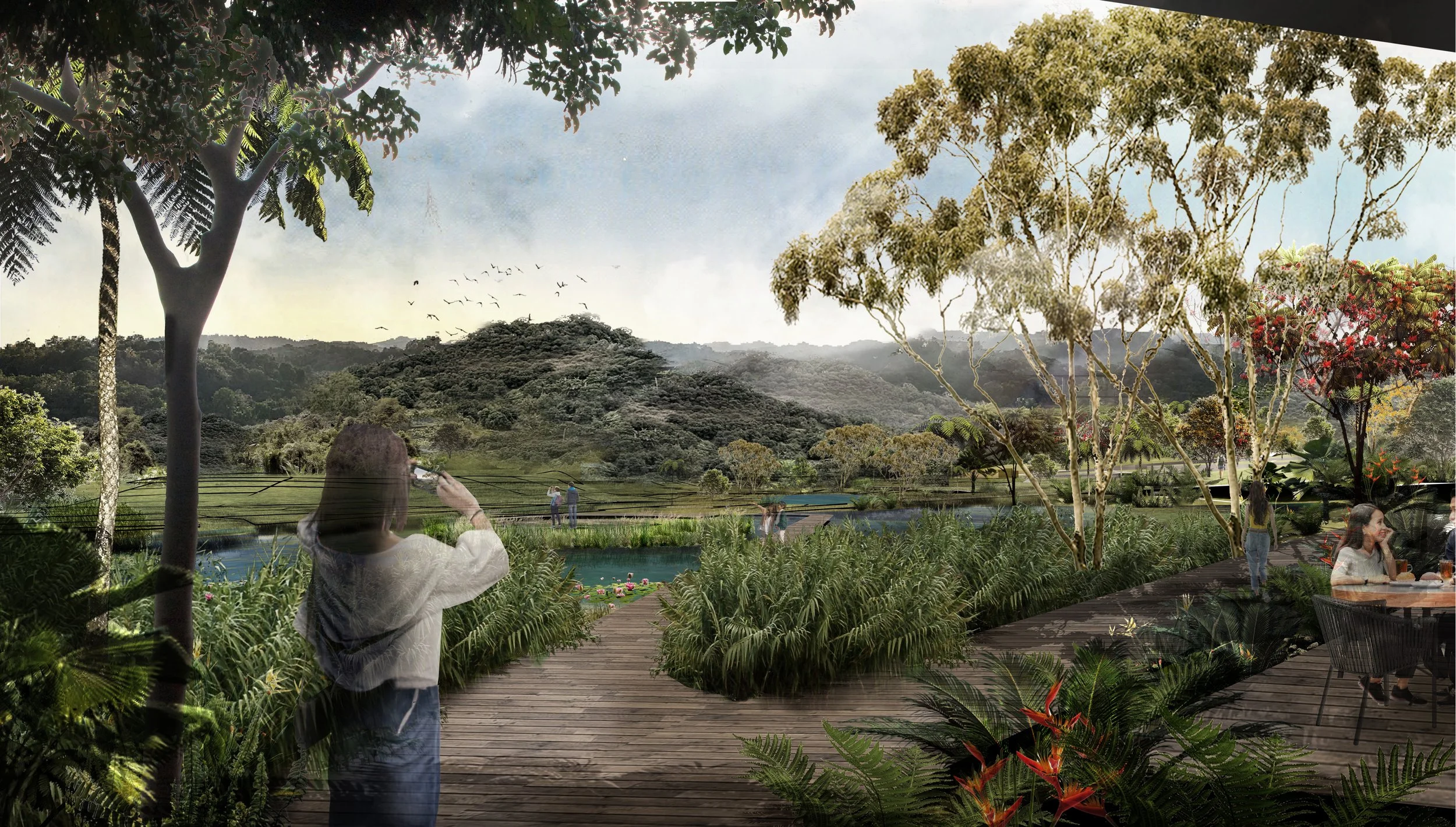
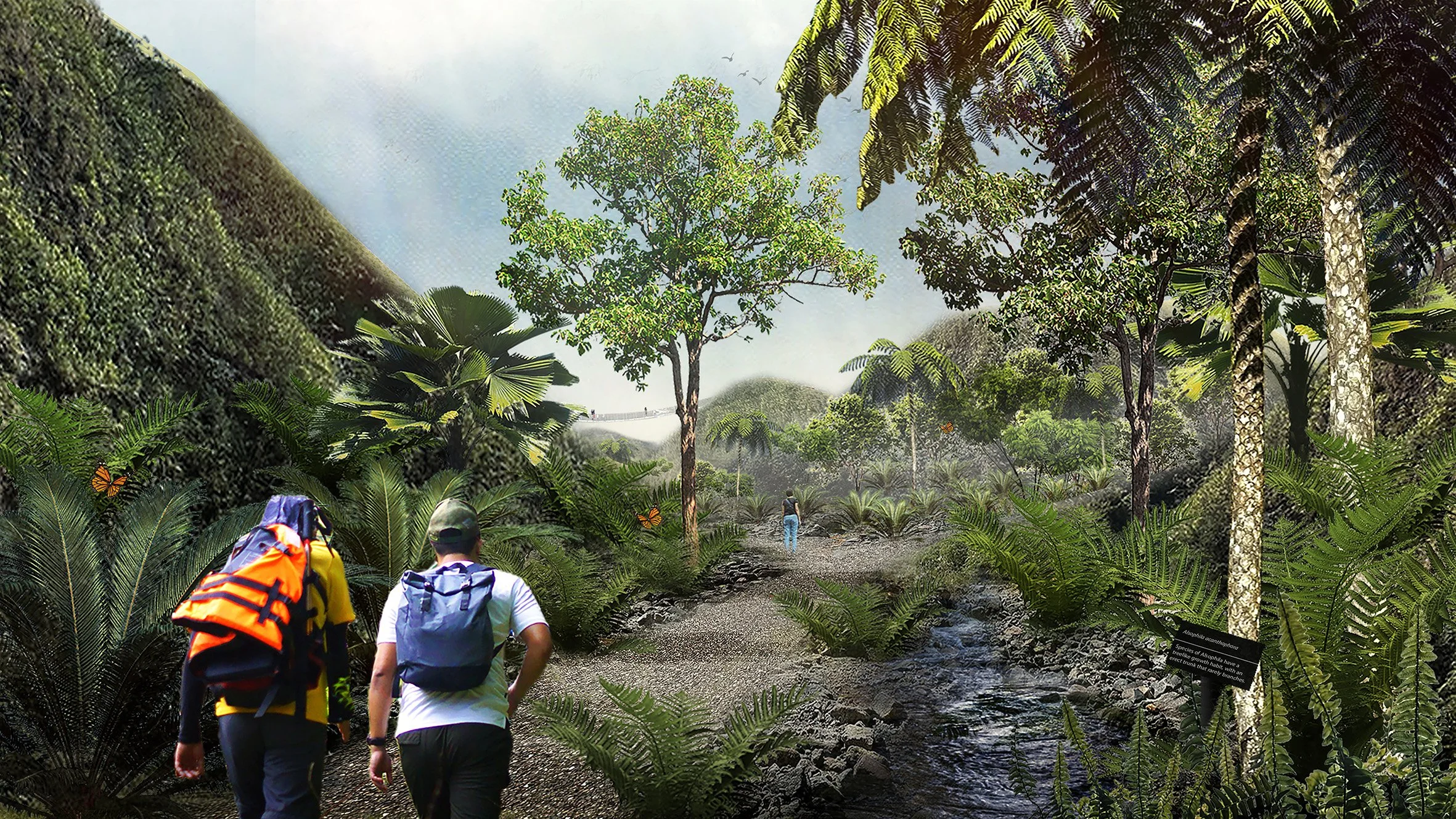
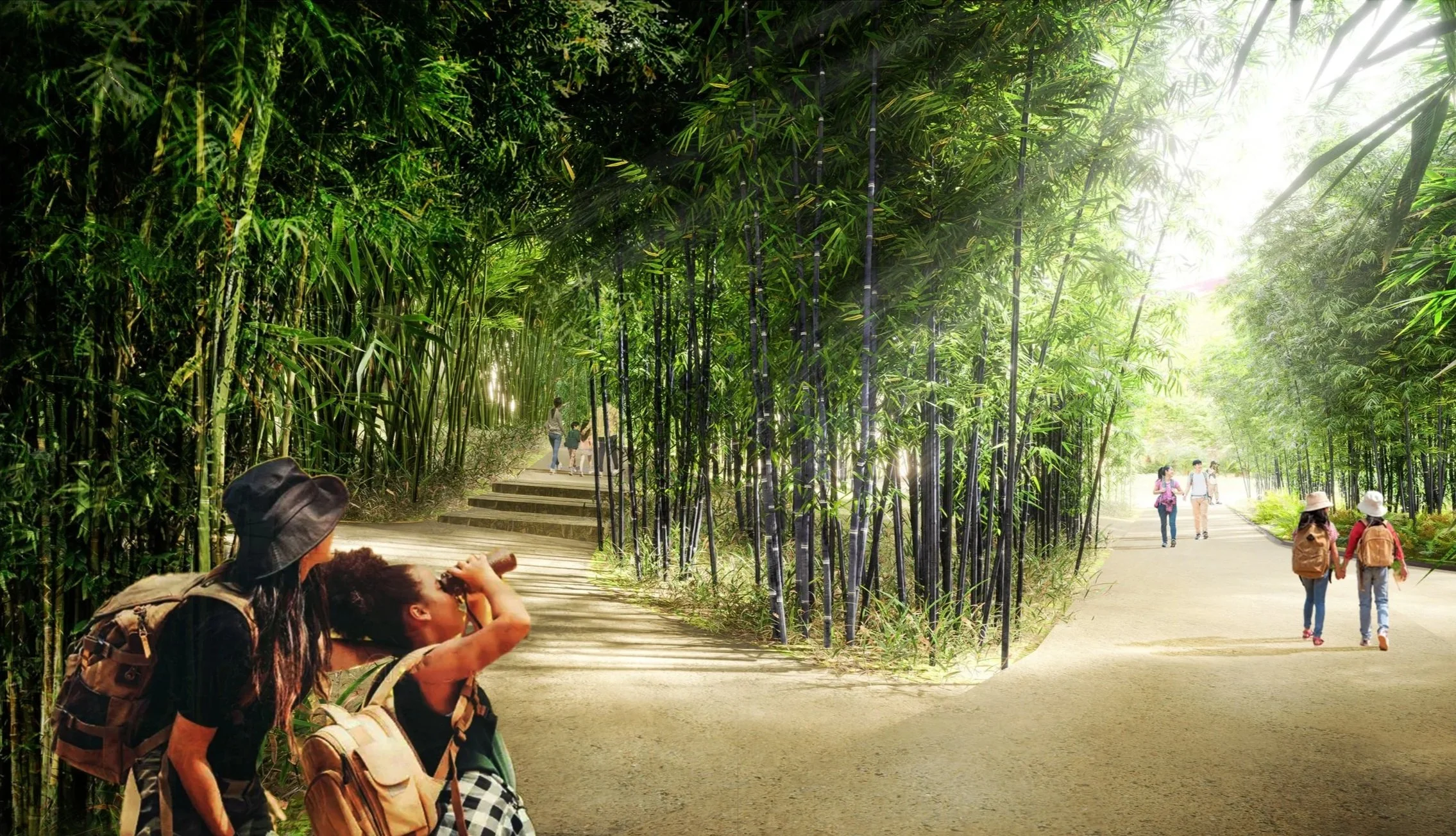
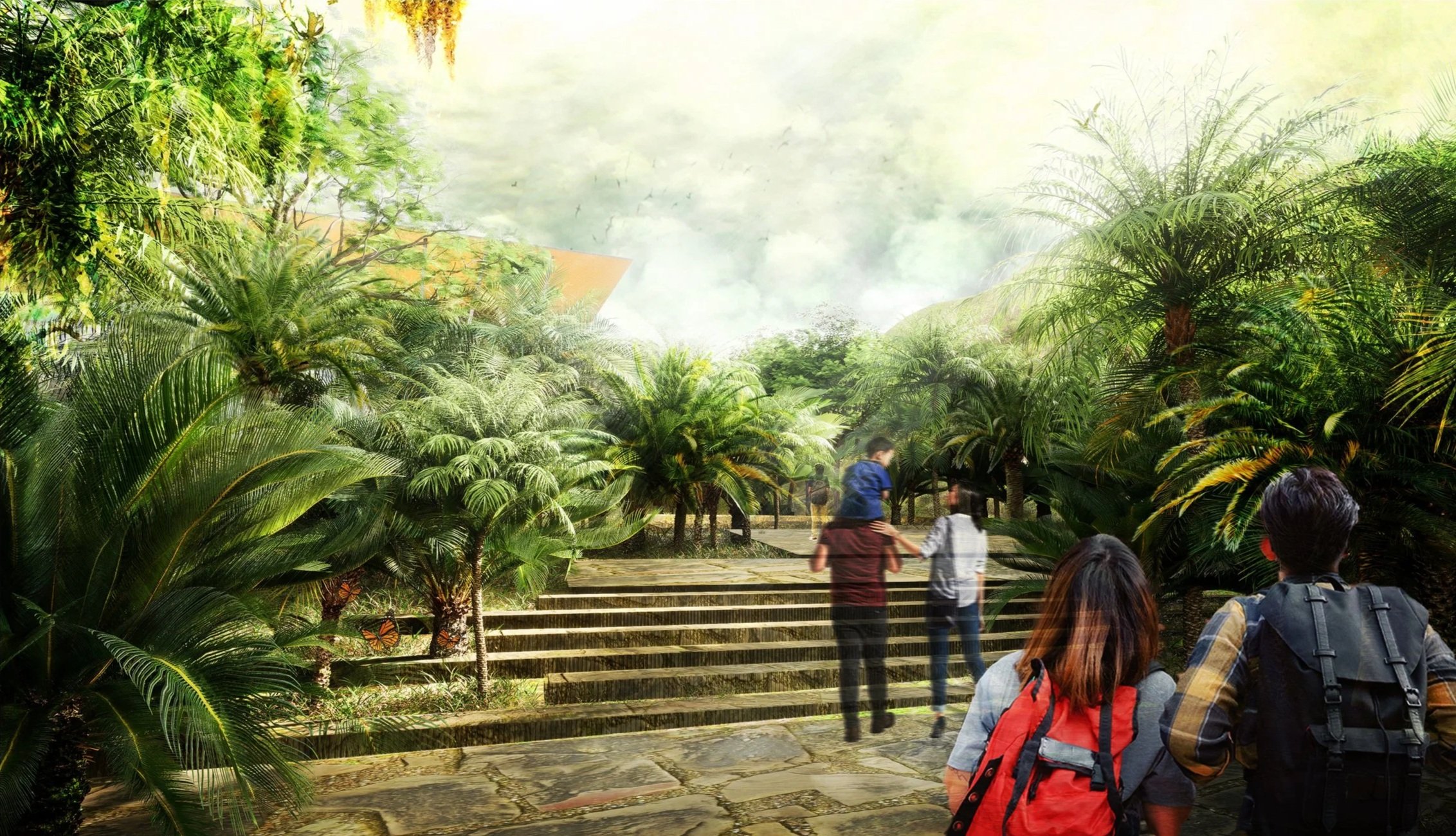
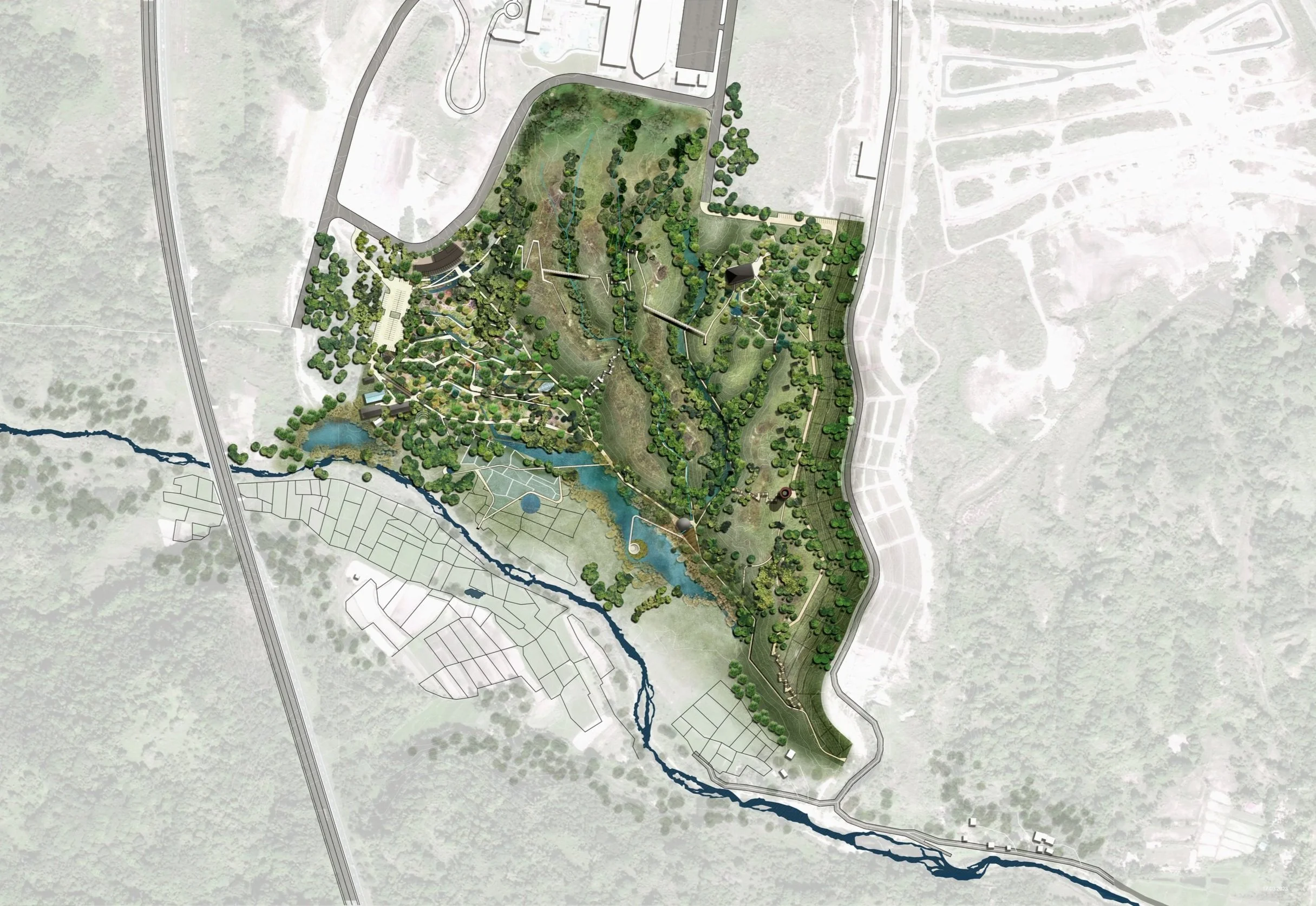
The design envisions three distinct character zones based upon the topography of the site. The south-western zone which gently slopes towards the floodplain of the river Porac is graded into a series of terraced taxonomy gardens. Various facilities such as biodiversity centre, herbarium and library, laboratory for scientific research, classrooms and shade covered areas for plant propagation ate integrated in the gardens as well as spaces for outdoor classrooms and gatherings. The central part of the site characterised by a rugged terrain of north-south orientated ridges with steep, deeply dissected slopes is where we touch the ground lightly; creating nature trails that invite visitors to explore the natural regenerating landscape. The valleys define a confined, intimate, and immersive connection with nature. Plants are arranged in terms of communities and native species to the dynamic of primary succession. This process of succession will display a progression from communities with lower species diversity -which may be less stable- to more stable communities with higher species diversity.
The highest elevated eastern ridgeline is envisaged to accommodate a cultural landscape overlooking the gardens and the wider landscape beyond. It accommodates a spine of projects such as a strategic positioned chapel, cultural village, accommodation for overnight stay and towards the southern tip an outlook tower overlooking the site and view towards Mount Pinatubo. Towards the south a larger water reservoir collects the site surface water runoff, meditatively mirrors the sky, and forms the fenceless transition toward the floodplain.
Paradoxical by concentrating on the site specific, local, and regional landscape-shaped and transformed by the natural regeneration of one of the largest volcanic eruptions in recent memory and by celebrating the traditional use of plants by the indigenous Aytas tribe; La Salle Botanic Garden will be of international importance and distinction.
LaSalle Botanic Garden
Porac, Philipines 2023 - date

La Salle Botanical Gardens
Location: Alviera Porac / Philippines
Typology: Botanic Garden
Site area: 25ha
Year: 2023 - date
Status: Under construction
Role: Concept Master Plan Design
Client: La Salle Botanical Gardens
Collaborators: SGS
Image credits: GROSS. MAX.
Prizes:
2024 La Salle Botanic Gardens, Philippines (with SGS) World Landscape Architecture- unbuilt conceptual landscape large scale: shortlist
2025 La Salle Botanic Gardens, Philippines (with SGS) Gantimpala Awards: Excellence Award professional conceptual landscape category