
Windrush / Square
Windrush Square
London, UK 2005 - 2010
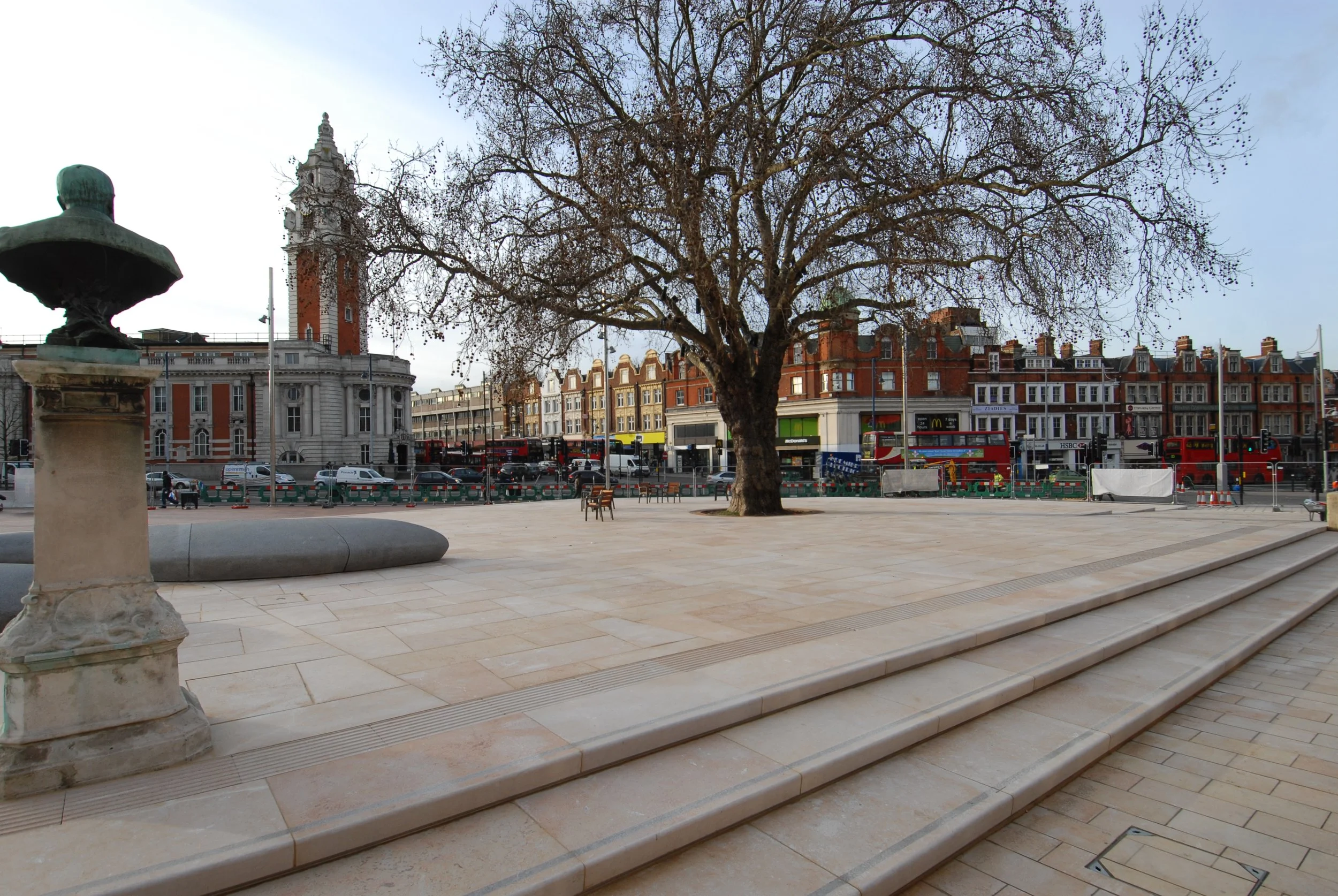
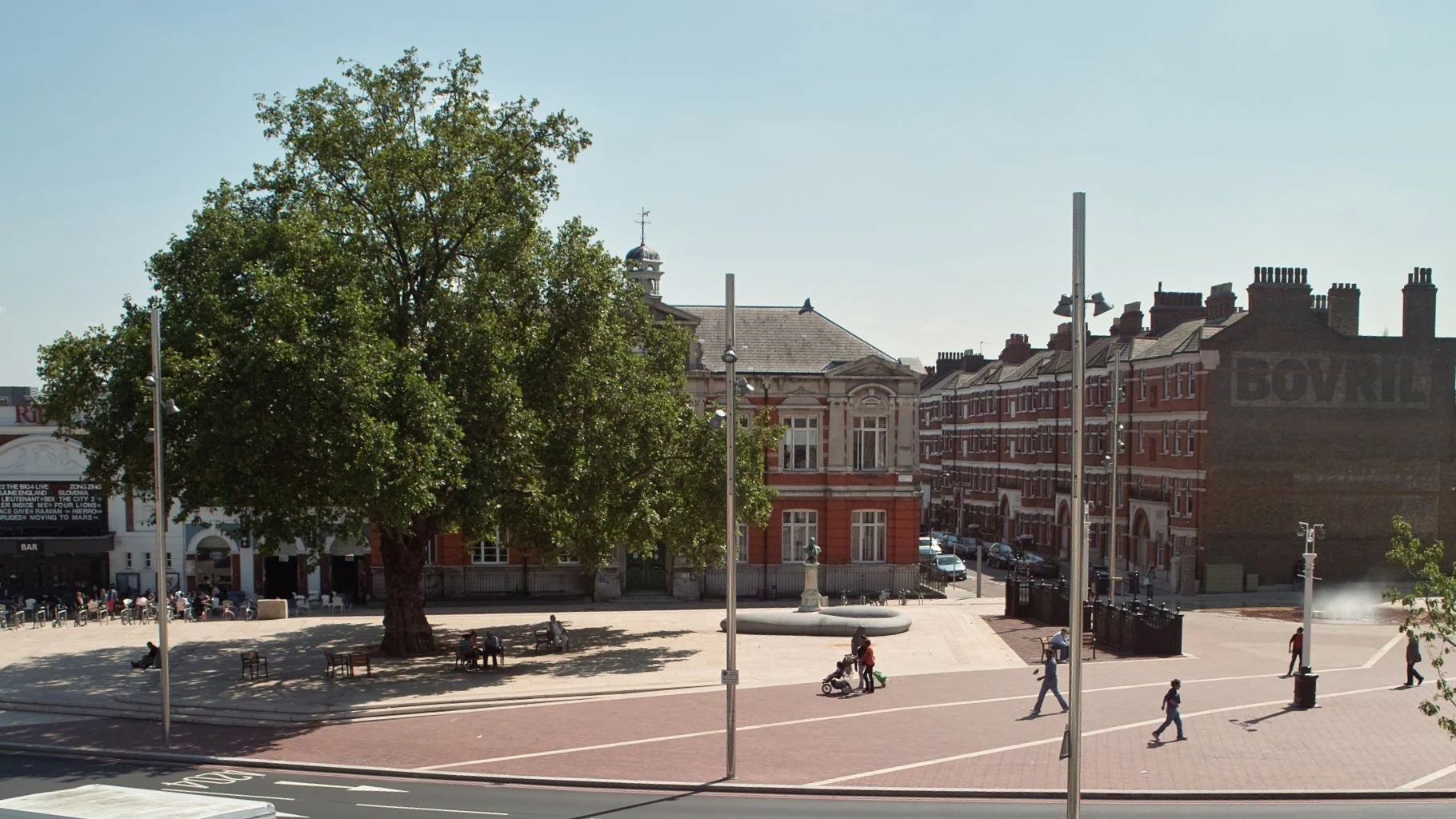
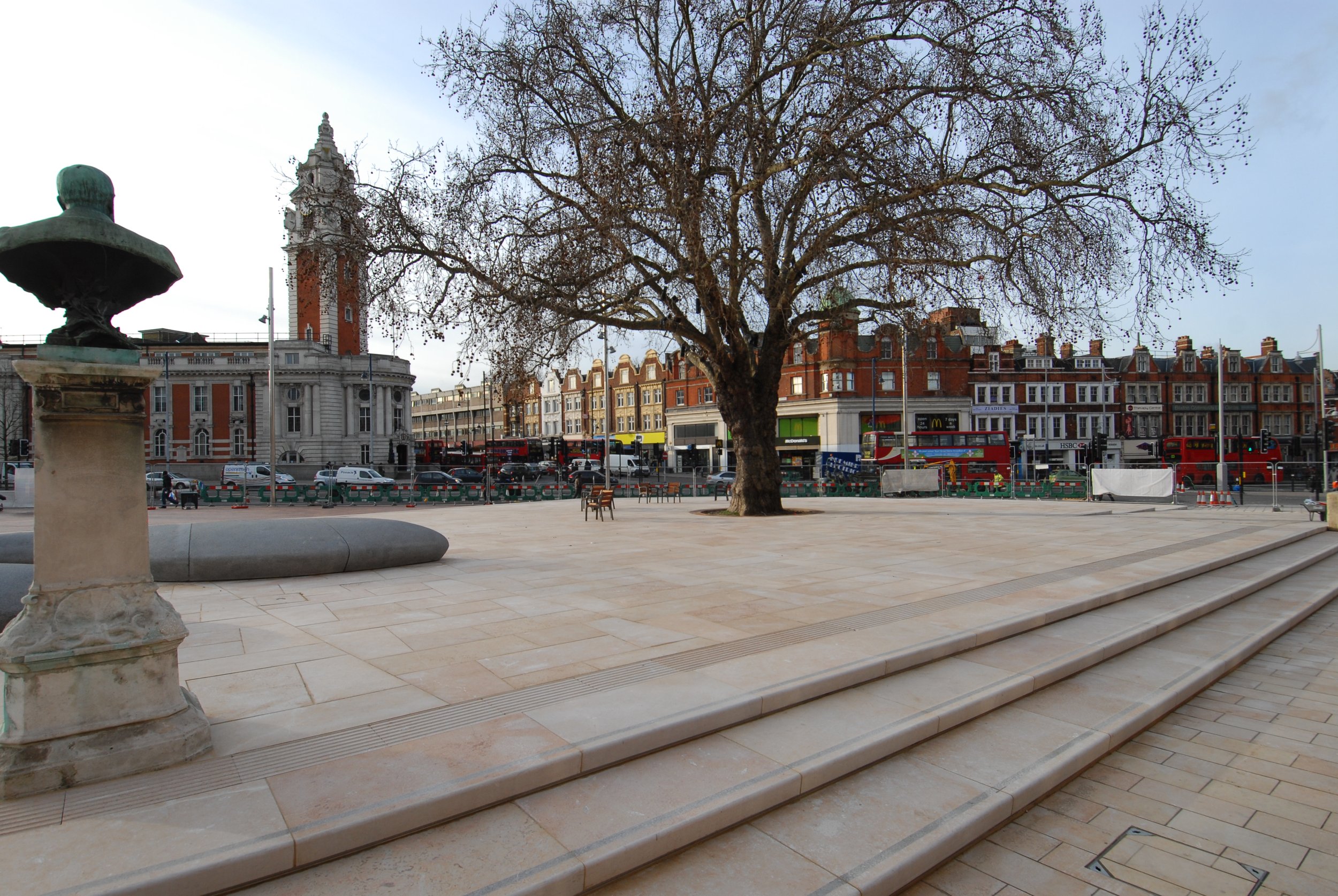
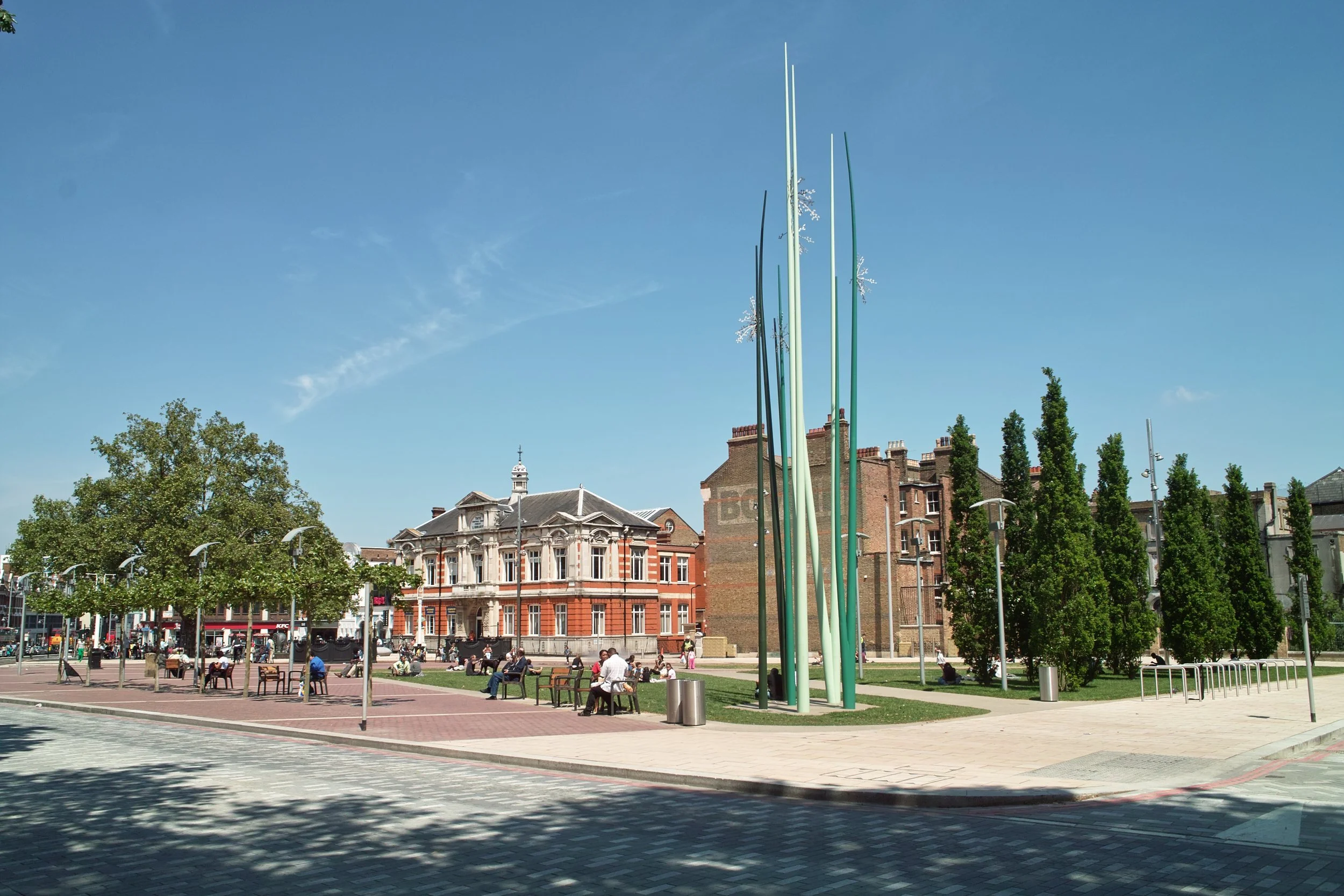
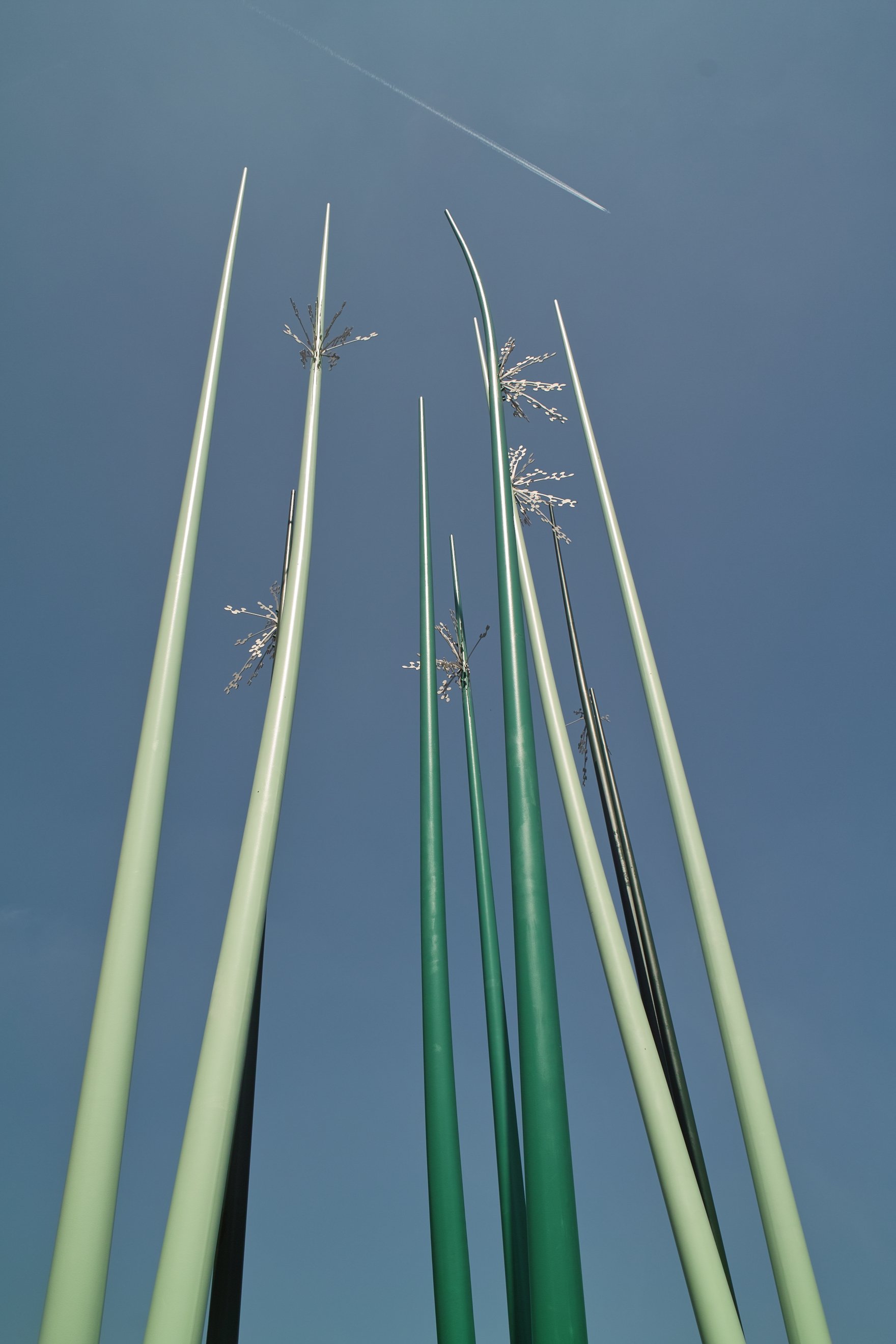
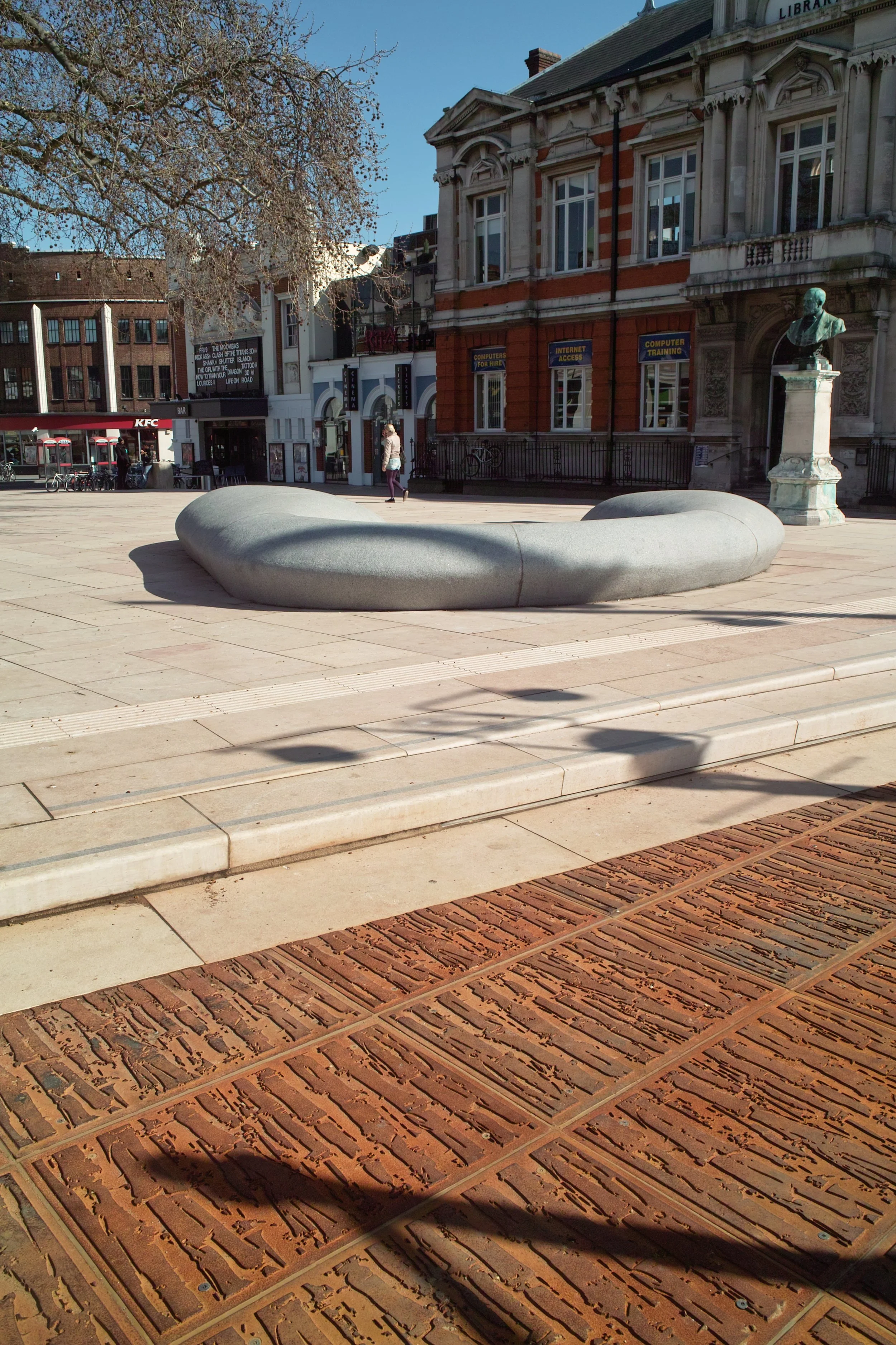
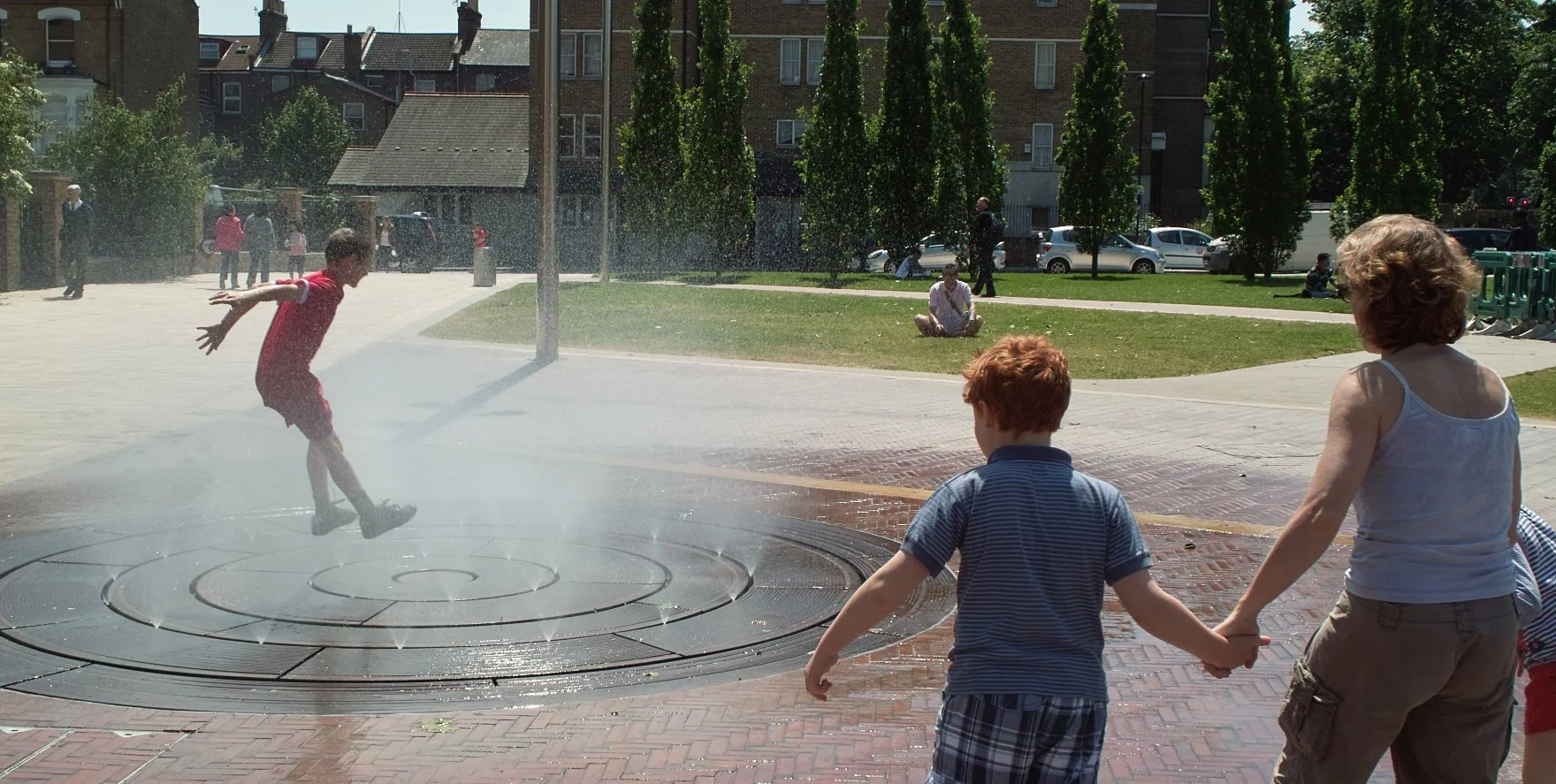
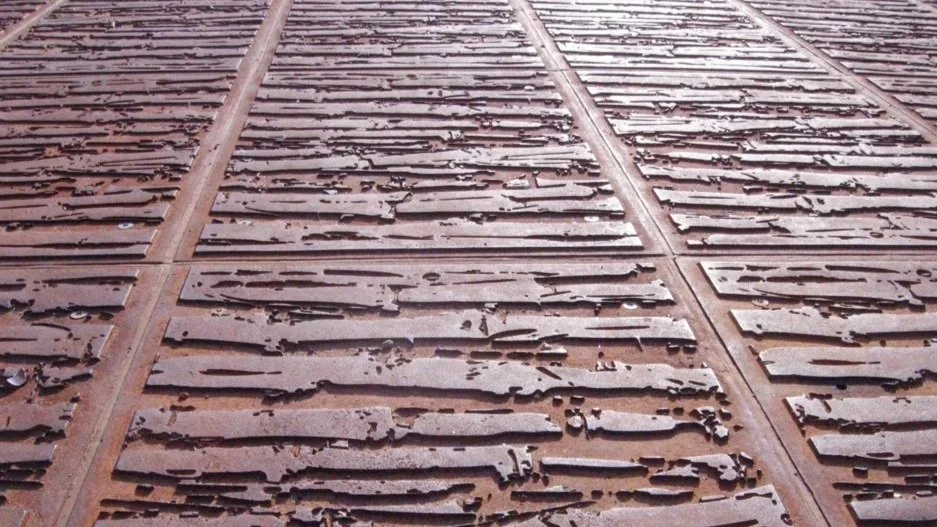
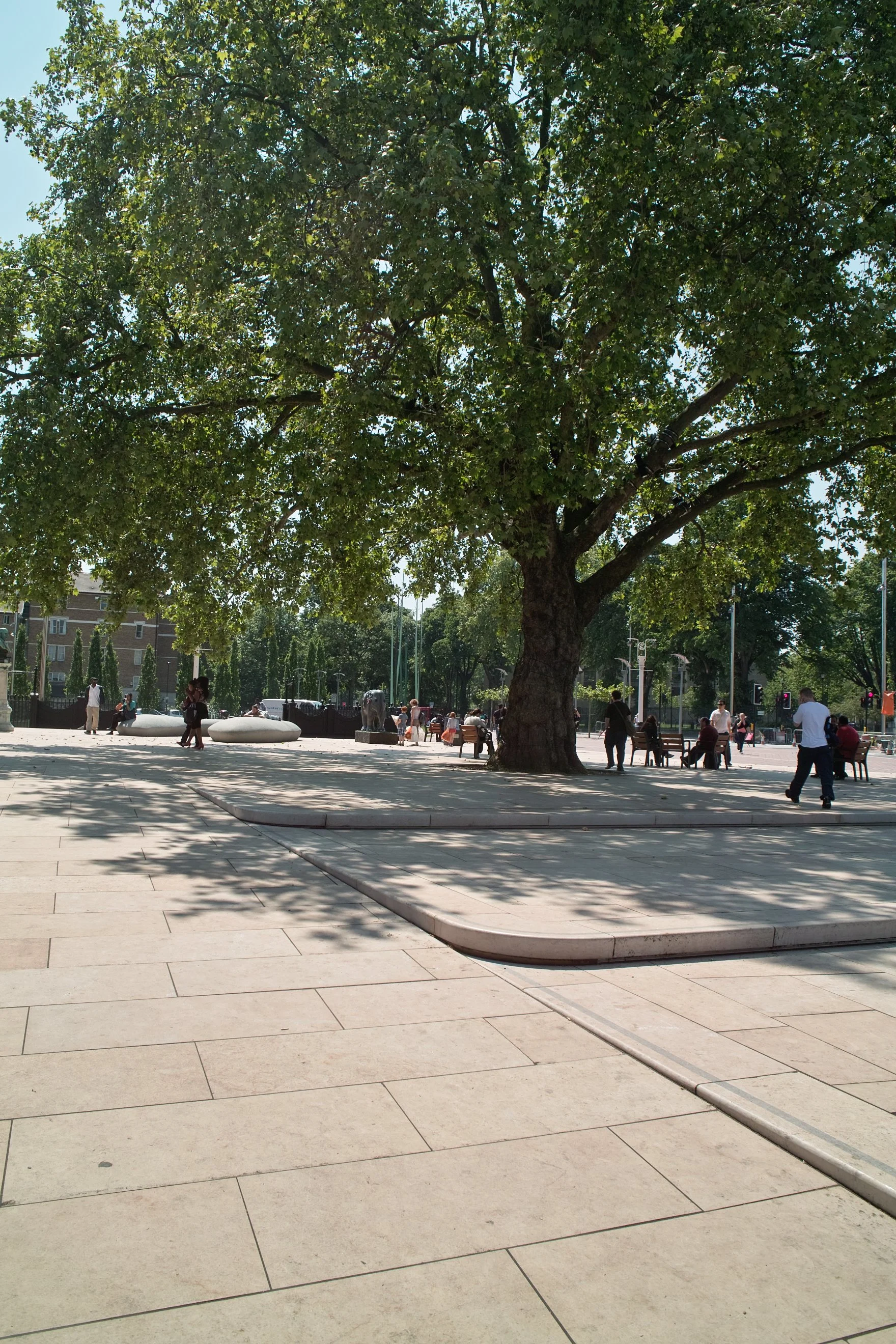
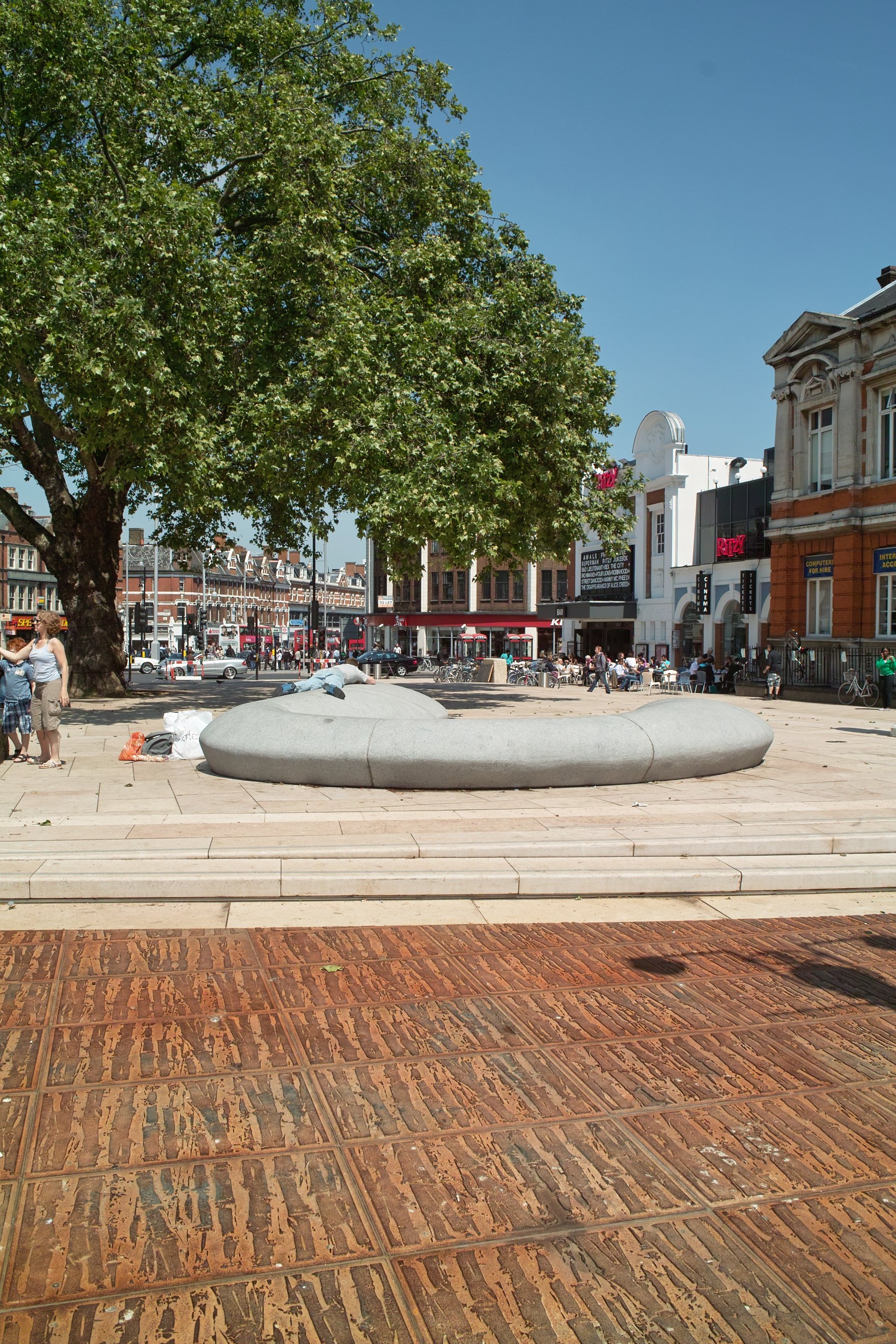
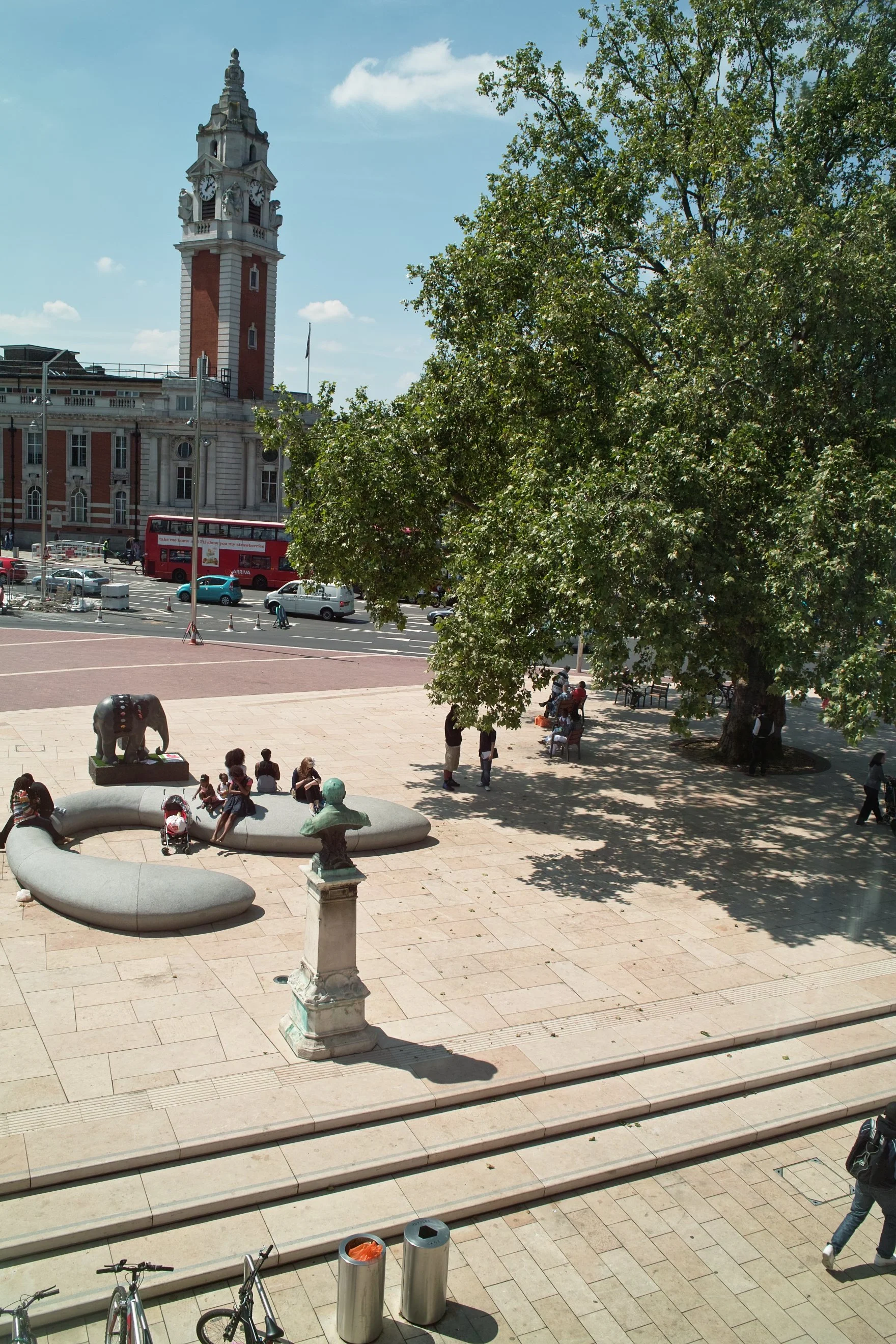
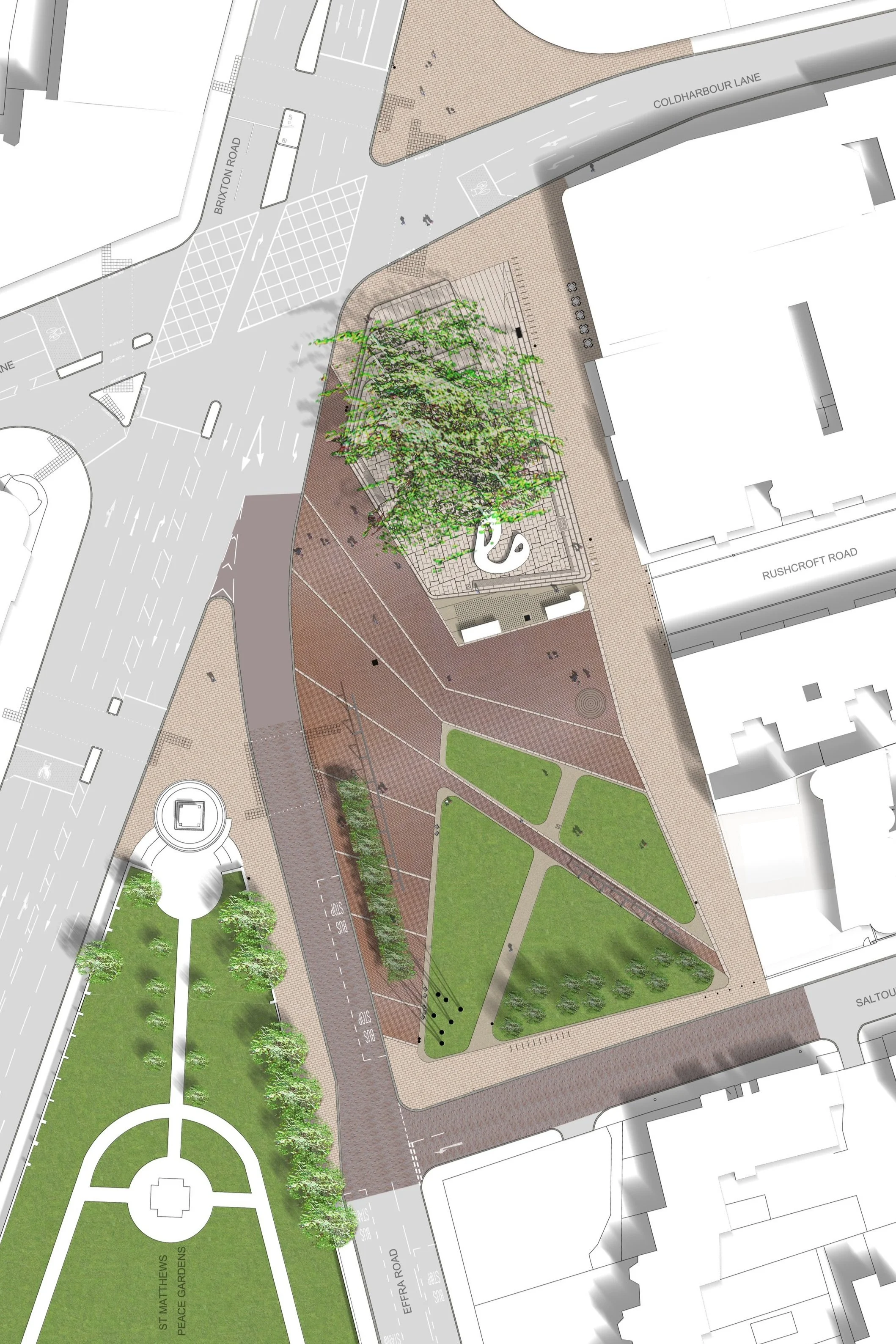
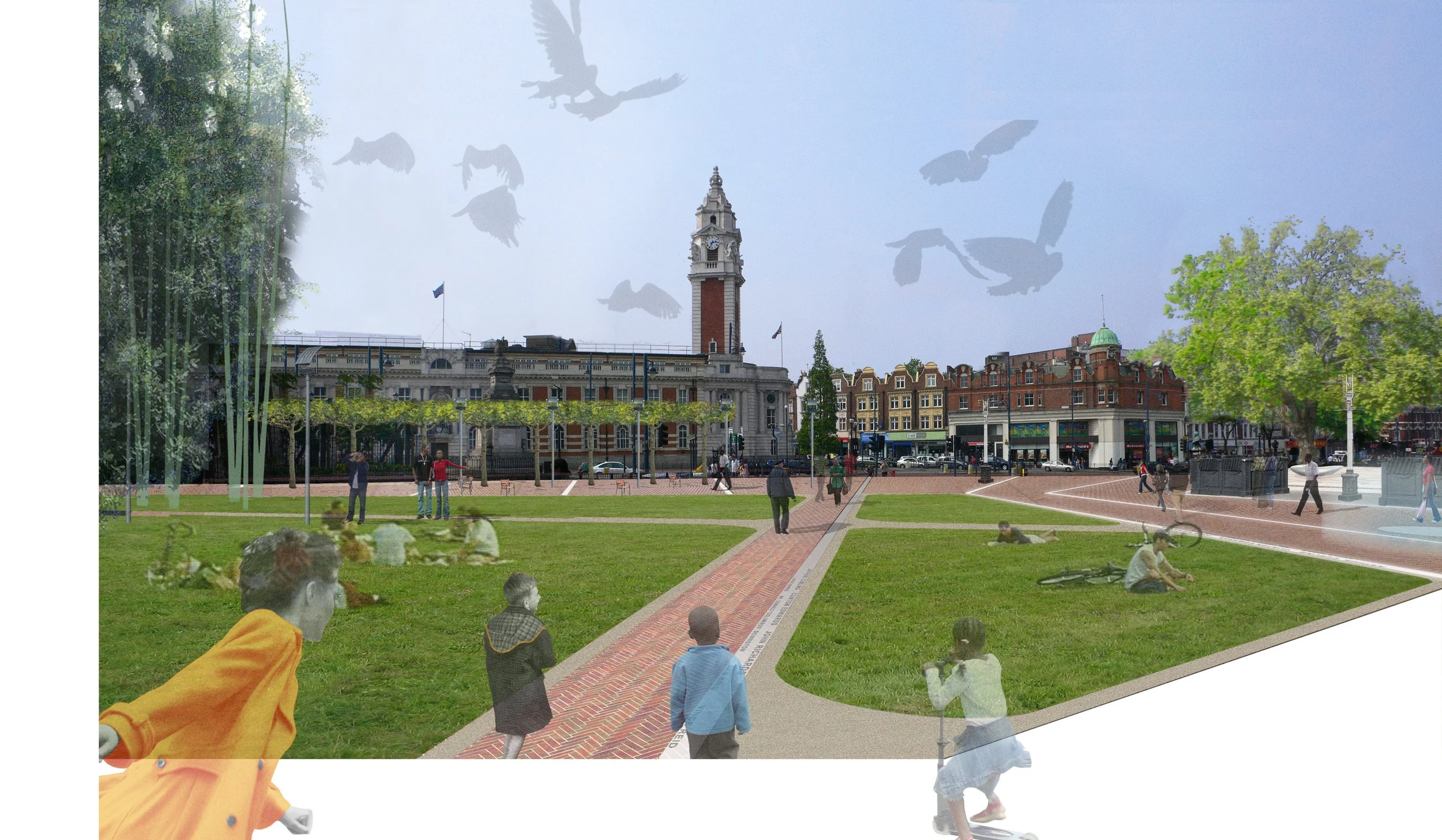
In 2003 GROSS. MAX. won the RIBA competition for the design of Brixton Town Hall Square. Extensive public consultation including a series of design workshops- led to major changes. The revised scheme won political endorsement 3 year later. The project initiated by Lambeth Council, the GLA and TFL aimed to create a much-needed high quality public space that does justice to the significance of Brixton. The space is left open for flexibility, clear, sightlines and pedestrian routes across. The square integrates three former separate spaces. One of the central elements is a large sculpture for seating, meeting and play. An important part of the project was rethinking the road lay-out. By closing one street, in front of what is now the Ritzy cinema, a more coherent public space has been created with activities spilling out in the square. A central majestic plane tree is retained as key feature. Steps with ramped access create a slightly elevated limestone paved platform around the tree to protect the existing roots and provide various places for seating. The southern half of the space is retained as lawn with grove of trees with diagonal paths across it to accommodate pedestrian desire lines. A row of pleached lime trees shield the space from the traffic of Brixton Hill and create more intimate seating areas. A tall light sculpture of a cluster of three freestanding ‘wands’ -inspired by the rush plant- creates a distinctive landmark. Wide and textured crossing points help to anchor the square into the wider urban network. A variety of textures and materials, including elements detailing the history of the Empire Windrush journey, add interest to the square. Materials like red brick, limestone and cast iron create a distinctive zoning which articulates the square and blends with the surrounding context of townhall, church and (former) library.
The square-renamed Windrush Square-reflects upon the role of civic space at the start of the 21st century as vibrant stage for a dynamic multi-cultural society. Traditional pillars of society such as church (religion), town hall (politics) and library (knowledge) which are all represented within Brixton Square vicinity are no longer the priority of such a civic space. It needed a new agenda in terms of programme and event and a new setting for those activities, which provides both spatial coherence and an iconic landmark. The Windrush generation has created a tight-knit community famous for its African-Caribbean culture. As part of the wider regeneration the grade listed Raleigh Hall has turned into a home for the Black Cultural Archives, which document the lives of people of African descent in the UK.
The combination of garden and square can be reconciled into a new urban typology, which provides for opposite experience such as solitude and event, enclosed and open, introvert and extrovert. Windrush provides an inclusive setting for the surrounding civic buildings and has since become an important gathering place for meeting, rallies and public events. On the night of the announcement of David Bowie’s death Brixton celebrated with grief and love their most famous son with a huge street party in Windrush Square.
In 2021 The Cherry Groce Memorial designed by David Adjaye was unveiled in Windrush Square.
Windrush Square
Location: London / UK
Typology: Public Realm
Site area: 0.75 ha
Dates: 2005 - 2010
Status: Built
Role: Lead Consultant
Client: Lambeth Council, Transport for London
Collaborators: Jane Wenick (structural engineer)
Publications:
Jamie Dean 100 neue Plätze für London Garten + Landschaft October 2006 Callwey Verlag Munich
udg.org.uk Urban Design Group Behind the image Windrush Square, London