
Urban Striptease
Rottenrow Gardens
Glasgow, UK 2020 - date
How to demolish a building in order to create a landscape
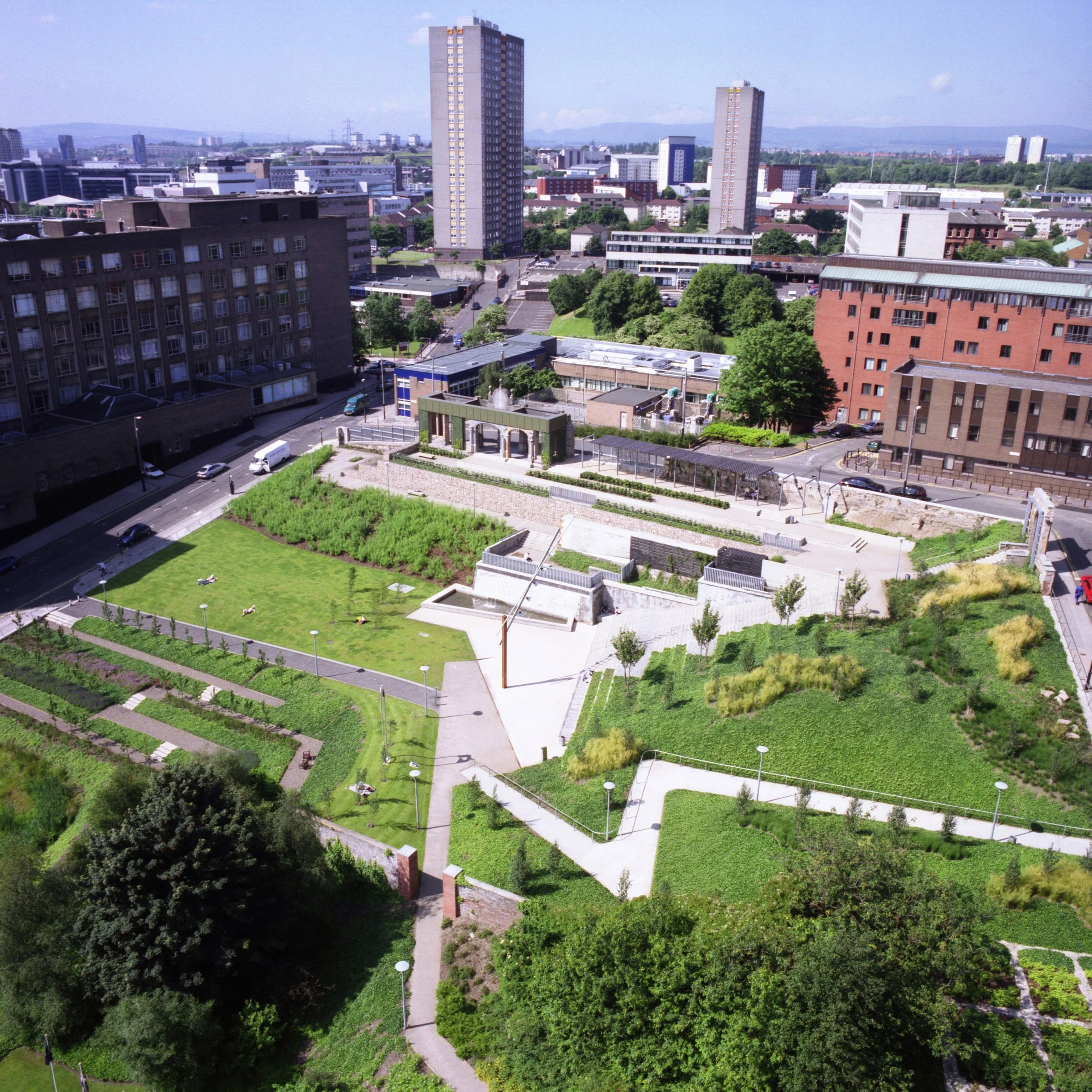
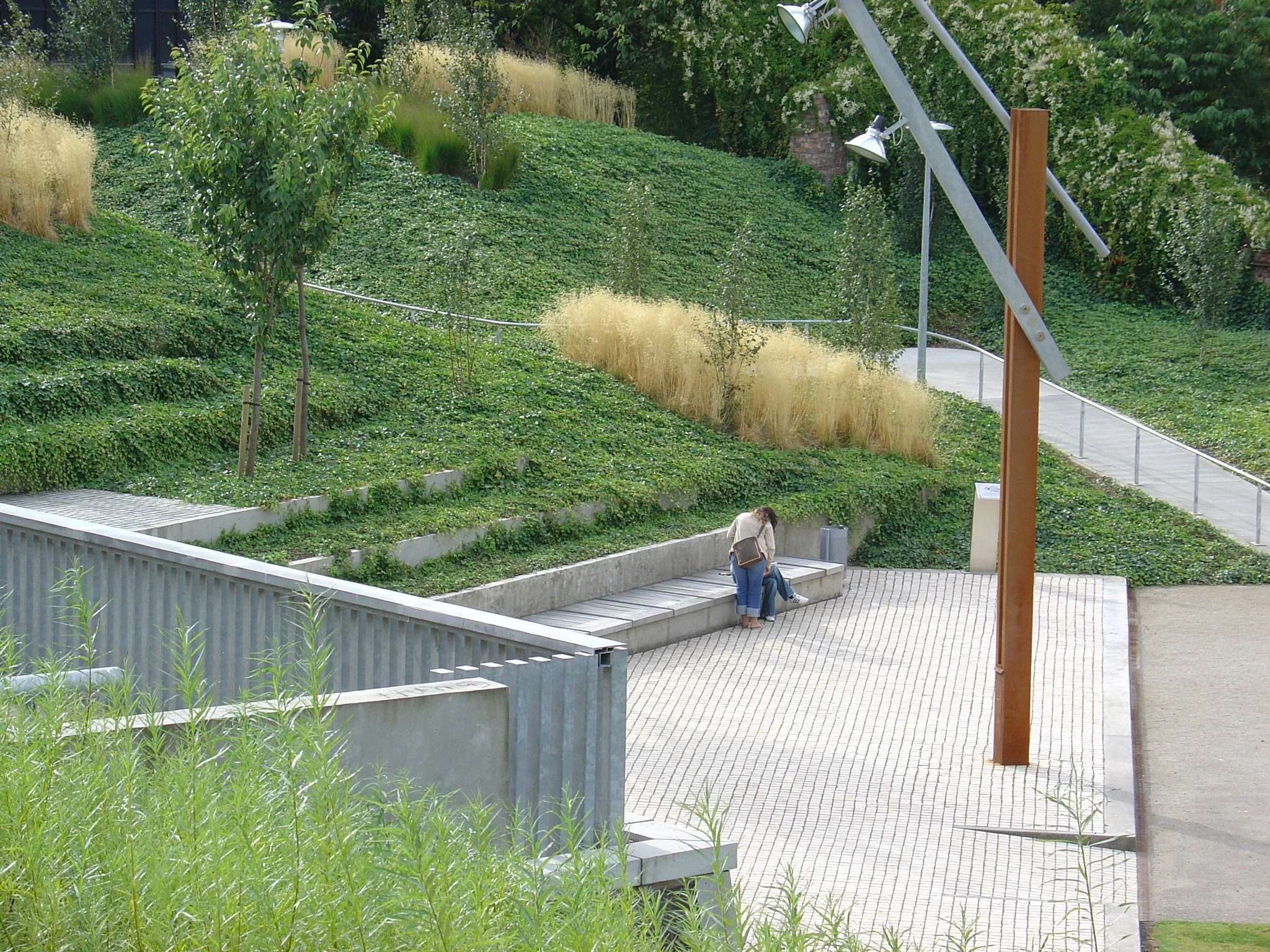
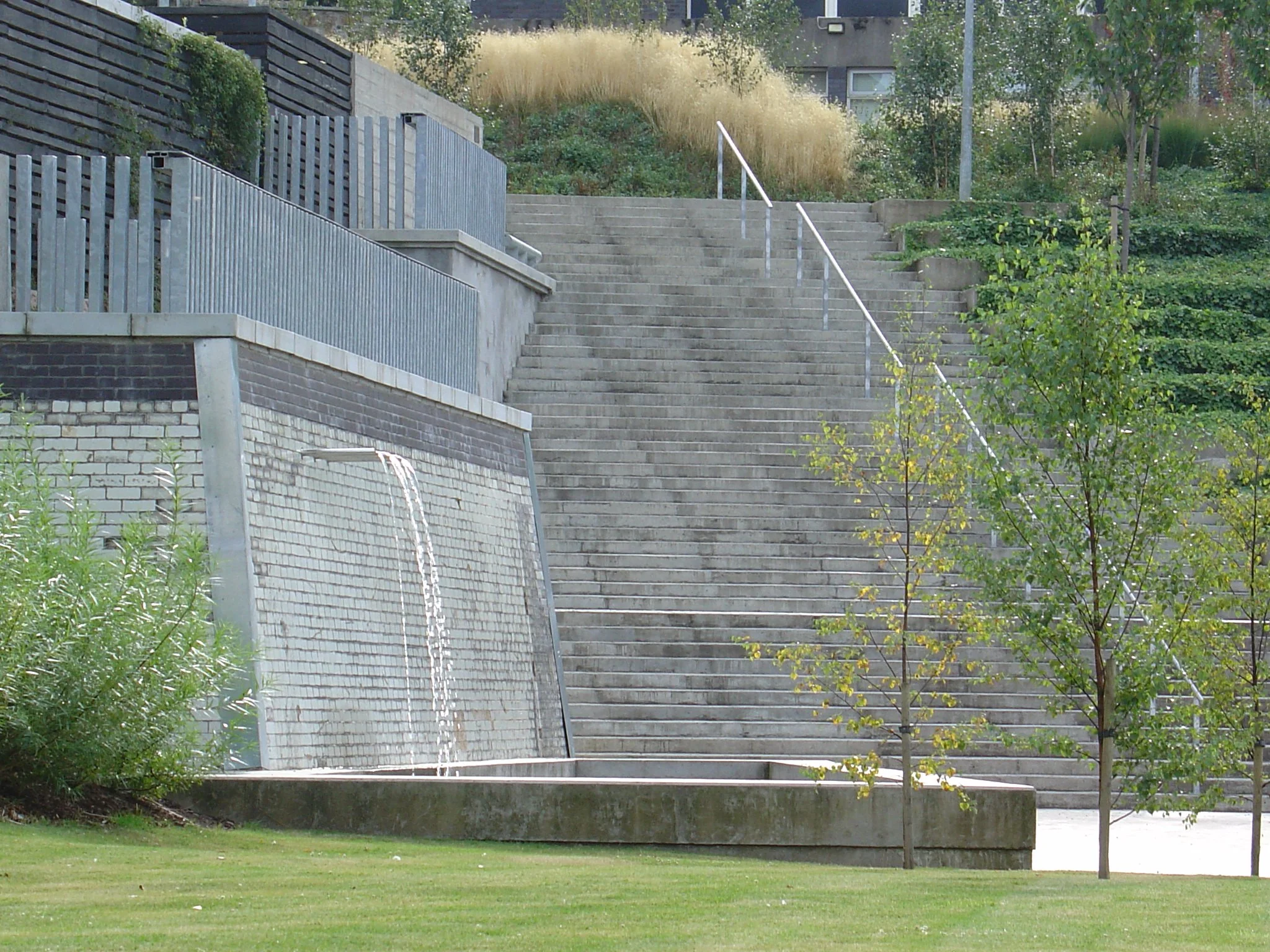
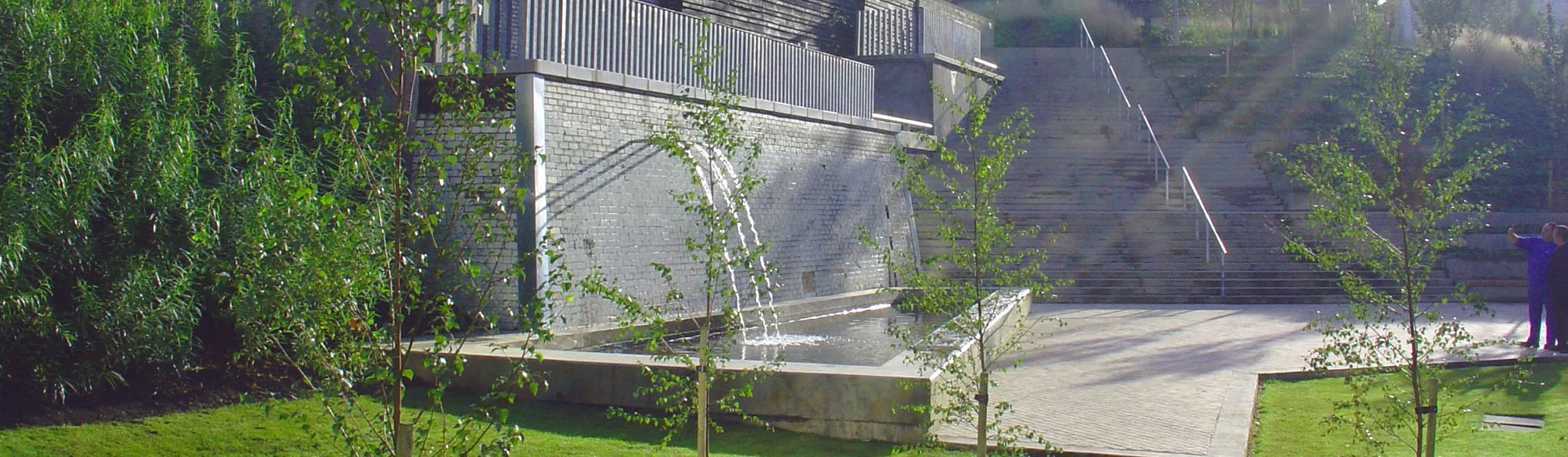
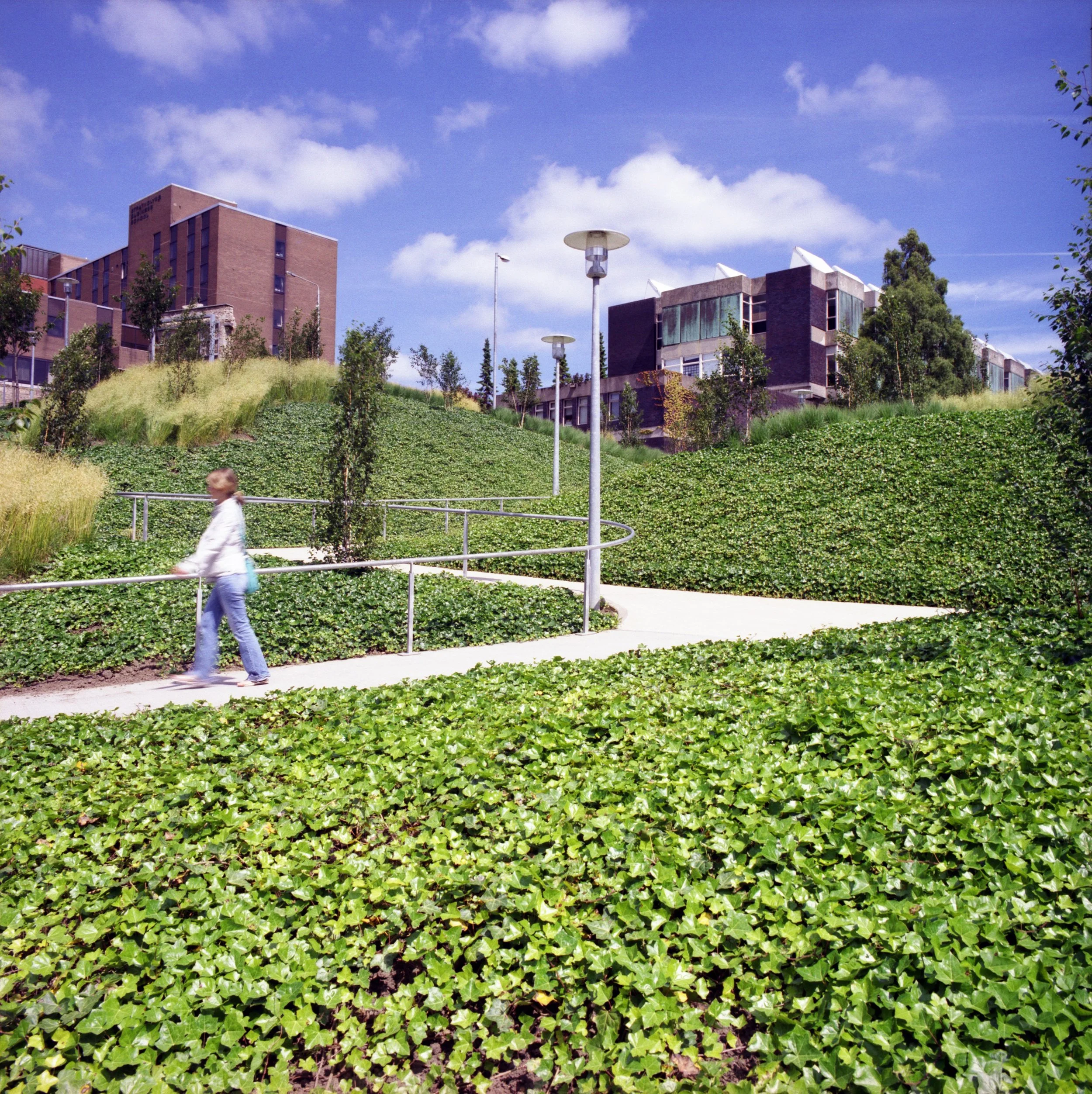
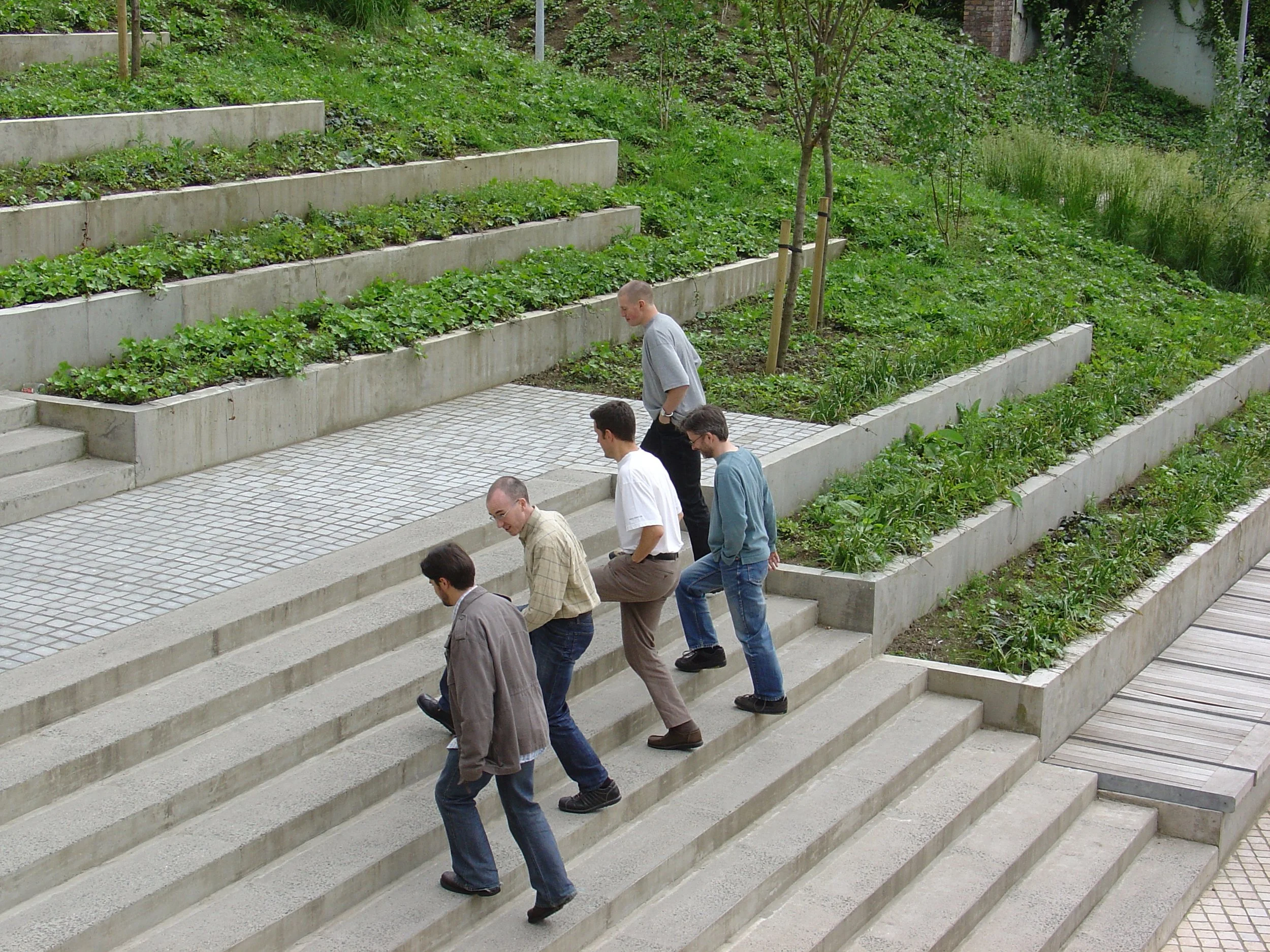
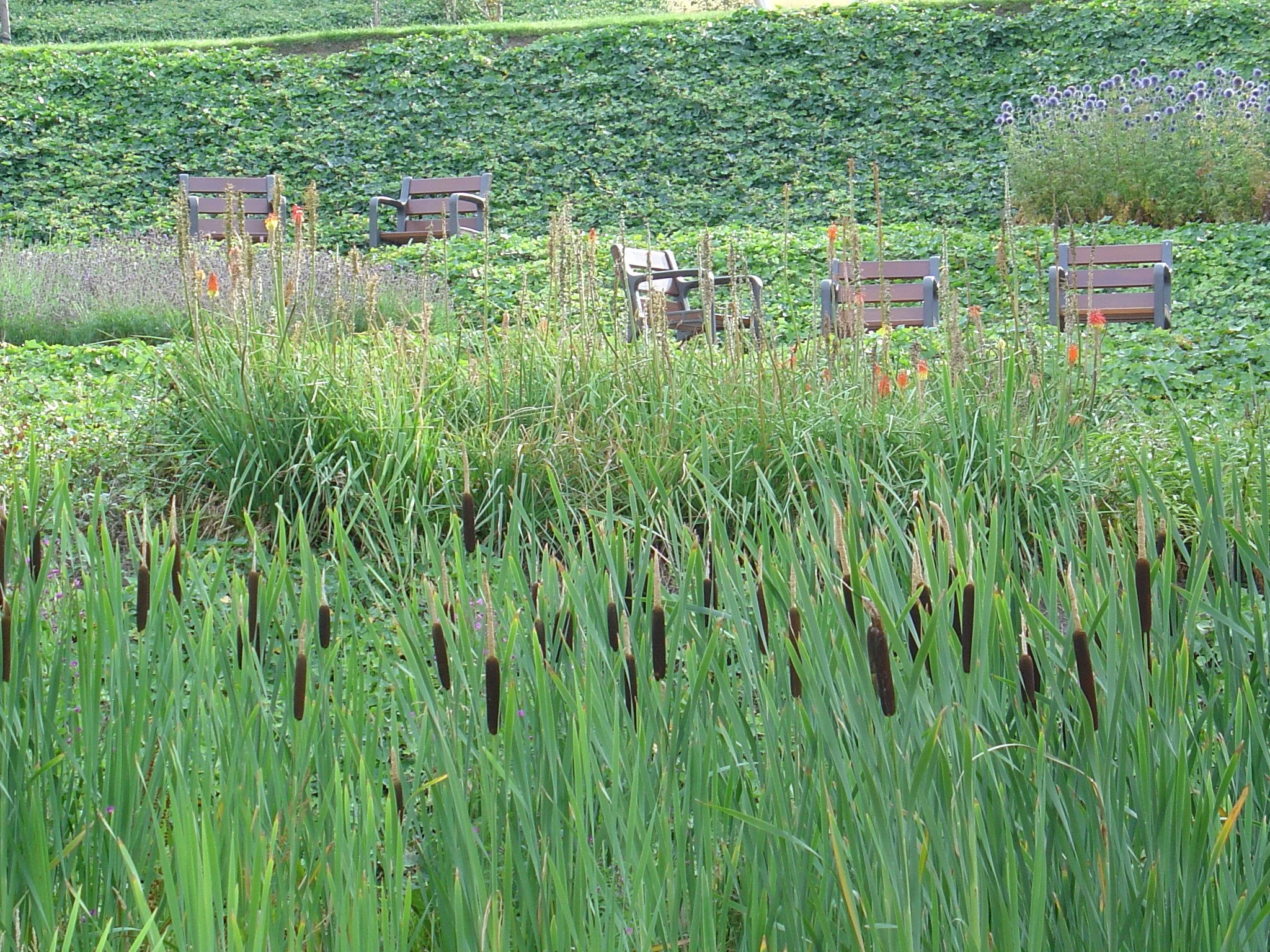
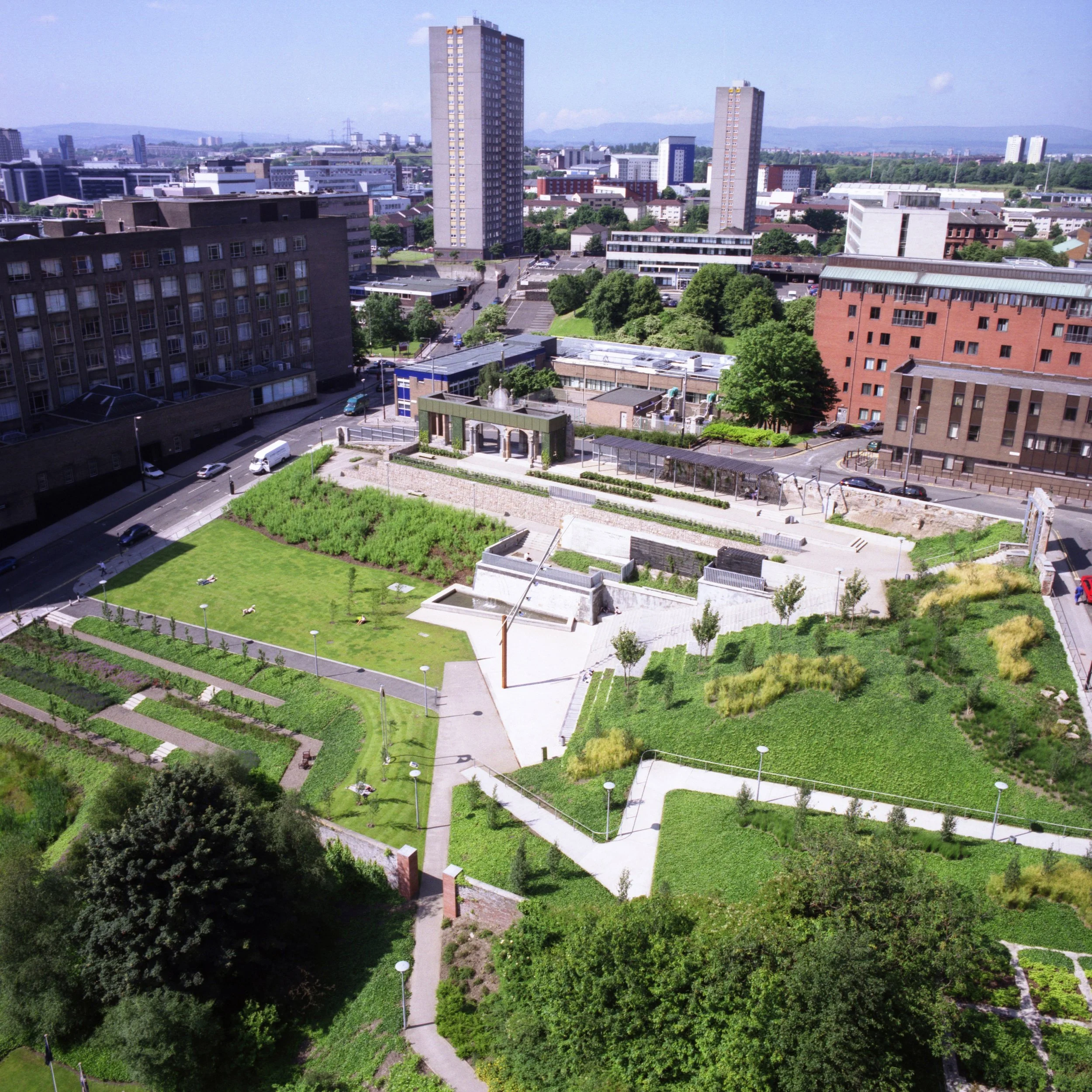
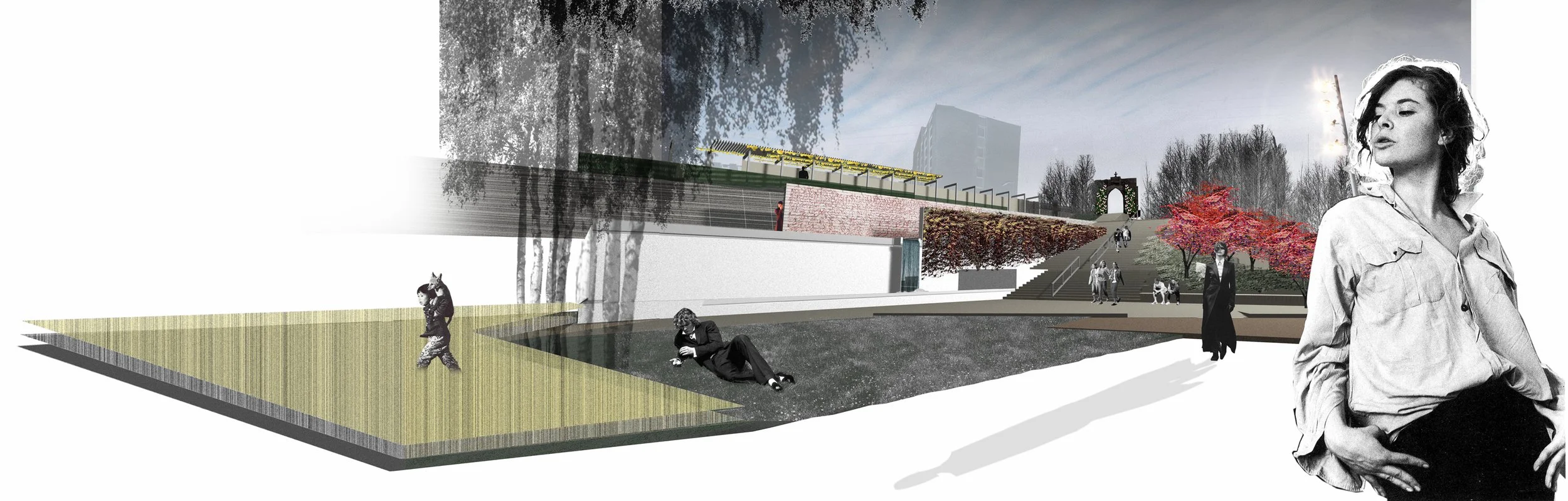
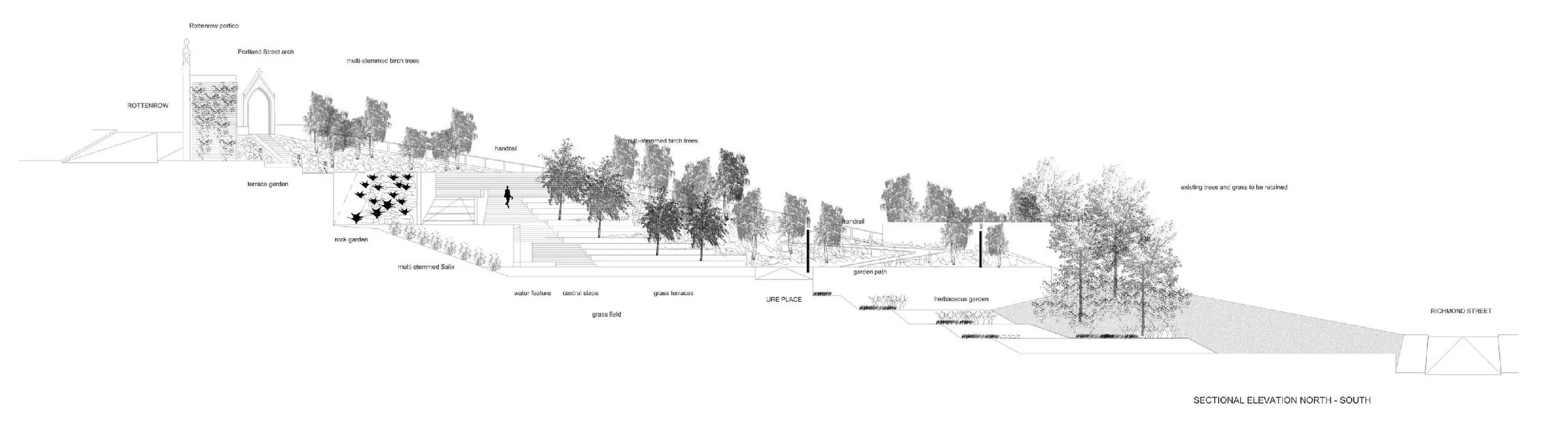
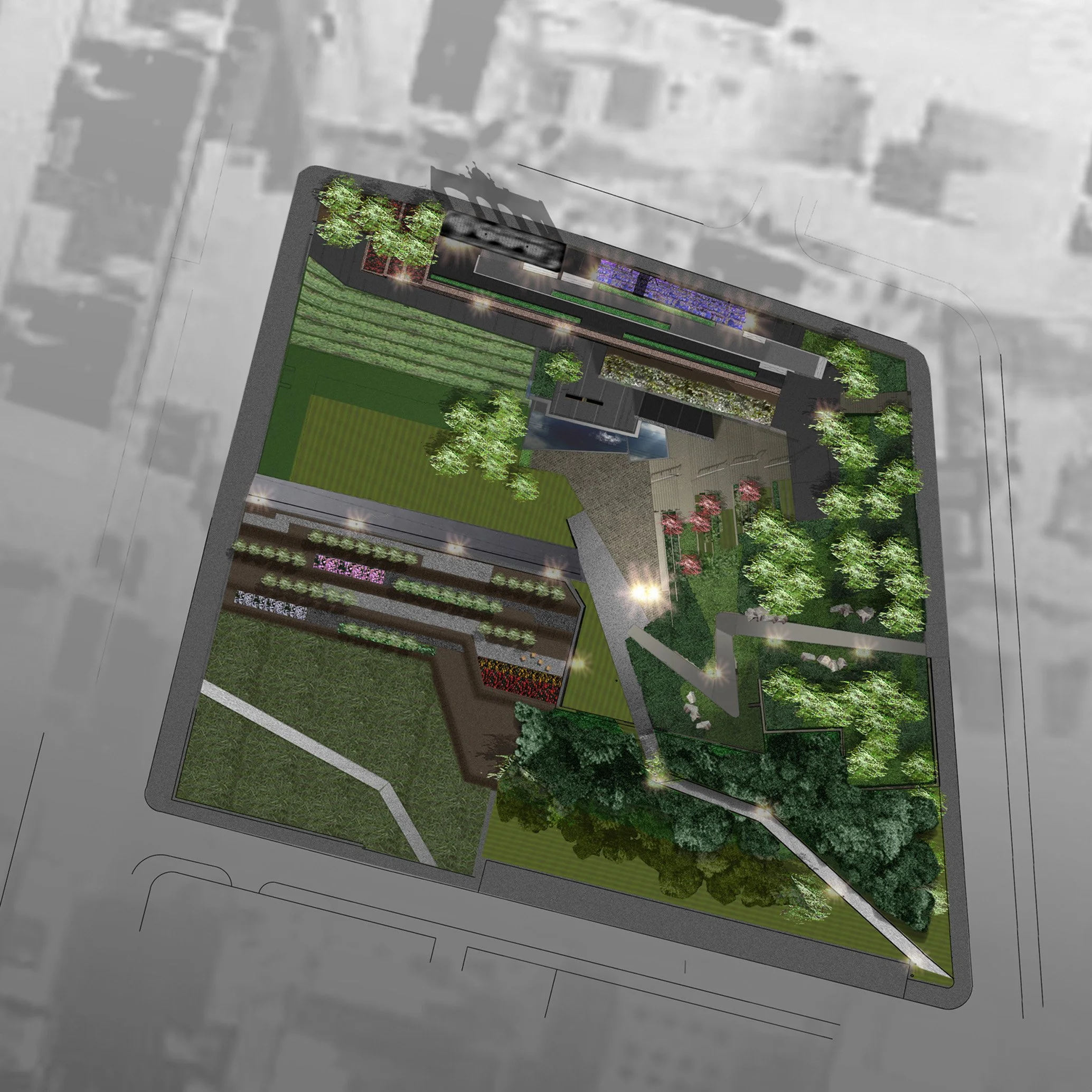
Strathclyde University acquired the site of the former Royal Maternity Hospital at the heart of their main campus in 1995. With a view to demolish the buildings waiting for future development GROSS. MAX. was appointed to design a temporary garden. We wryly observed that since most buildings destroy landscape, for once to destroy a building to create a landscape felt like sweet revenge. To avoid the reputation of urban barbarians we did acknowledge that the site had strong memories for many people, either by giving birth or being born, and envisaged the garden as layered landscape: a palimpsest of time. The design concept was based on a terraced garden which allows the best possibilities for a variety of usages and acts as belvedere overlooking the garden and beyond. Emphasis is places for the garden to be the hub in a network of routes and connecting various university buildings within the campus. The terraces, pergola, retaining wall and steps are juxtaposed in a playful composition. The core of the garden is a generous flight of steps bridging an eight-meter height difference, allowing views, movement and seating to watch outdoor performances. The flight of steps facing a limestone paved square with raised water feature and single sculptural lamp column. The slopes are planted with tall grasses, ivy and birch. Other plantation consists of beech hedges, coppiced willow and grove of crab apples. At the very bottom a wetland collecting water runoff creates a pocket nature reserve. Architecturally important elements such as the old entrance portico and a former archway are retained in-situ and incorporated as “found objects” into the overall design. Gabion retaining walls are filled with a warm toned crushed sandstone salvaged from the former hospital building. We once proclaimed that we would like to reveal the hidden layers in the landscape not unlike a sensuous striptease.
The jury of the Landscape Architecture Europe Foundation felt that the scheme was remarkable for’ its density of contextualism, it is well designed and well made, modern without being over pretentious…it exploits the topography, incorporates existing old stone arches into the park area and has a well-integrated balance between gardens, open space and plazas”
The project was so successful the garden remained as a permanent part of the campus to this day. Recently plans have been developed without GROSS. MAX. involvement for (partly) relandscaping.
Rottenrow Gardens
Location: Glasgow / UK
Typology: Park
Site area: 1.2 ha
Year: 2000 - 2003
Status: Built
Role: Lead Consultant
Client: Strathclyde University
Image credits: GROSS. MAX., Peter Iain Campbell
Prizes:
Dynamic Place Award (Commendation), 2004
Scottish Design Award 2005
Publications:
LAE Foundation (Ed)Fieldwork Landscape Architecture Europe Birkhäuser, 2006
Jose Manuel Vidal (ed) Jardines Rottenrow Paisea. Parque urbano. 002 June 2007
Tim Richardson (essay) Close-Landscape Design and land Art in Scotland Northfield Print 2008
Emma Halliday (curator) Common Place catalogue The Lighthouse, 2003
Nadja Amoroso Representing Landscapes: One hundred years of visual Communication Routledge, 2022